
What is the Roche limit? The Roche limit is the minimum distance that one planetary body can approach another planetary body without being torn to pieces.
The Roche limit is named after Edouard Roche, the French astronomer who first calculated it in 1848. He came up with his theory while he was studying the rings of Saturn. He thought that they had probably been caused when a smaller moon came too close to Saturn and was torn apart by its gravity. The rings were the debris left over from that smaller planet. He then went on to come up with a method to calculate the distance that would cause something like that to happen.
When we look at a plant like the Earth, or Mars, we think of them as being completely solid. They are, but only because gravity is holding them together. Rocks don’t naturally stick to other rocks unless gravity is pulling them all down towards the center of the planet. Nobody knows exactly what gravity is and what causes it, but it is observable. Everything that has mass exerts gravity and the more mass something has the more gravity it has. When planets form, all of the particles in the dust cloud are pretty much the same size, but as they start to clump together, they get bigger. As they get bigger, their gravity increases and they start to attract other particles. This continues until you have a whole planet. The gravity a planet has works in two different ways. Planetary bodies attract each other because of their gravity. Planets also attract themselves. Gravity pulls from the outside down towards the center of a planet. This keeps all of the pieces together and pressing down. It also creates a lot of pressure, which is why the centers of planets are very hot.
The Roche limit is the point where the gravitational pull of one planetary body is strong enough to overcome the second planet’s own internal gravity, ripping it to pieces. That limit depends on the size and density of both of the planets and is calculated with a formula. The equation shows that the Roche limit depends on only two things: the size of the larger object and the relative densities of the two objects. A denser moon can orbit closer to a planet before being torn apart, while a less dense moon must stay farther away. The formula needs density because a planet with a higher density will exert more of a gravitational pull than a planet of the same size with a lower density. A fluffy gas giant and a small, dense rocky planet have very different gravitational effects.
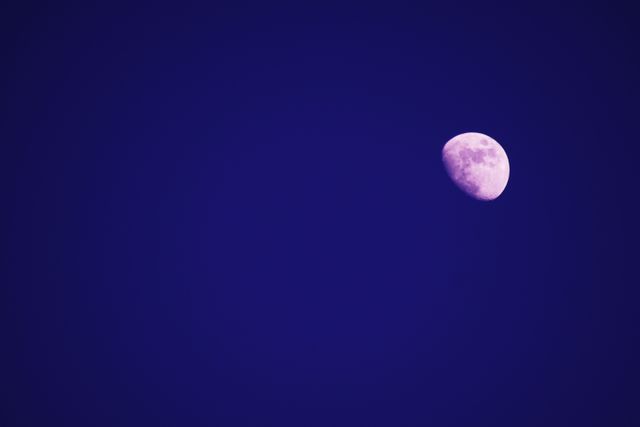
When two planets come close to each other, they exert a pull. This pulls each planet slightly towards the other. You can see that as the moon goes around the Earth. The Moon pulls on the Earth, slightly raising both the oceans and the land beneath them. The movement of the oceans produces the tides. As the moon goes around, that bulge follows it. The same happens on the moon. However, because of their distances, the Earth’s gravity far exceeds that of the pull from the moon, and the bulge is pulled back in as soon as the moon passes. Trouble starts if the planets are closer, or if the planets were bigger. If the moon was replaced with Jupiter, we might not be so lucky. Jupiter is over 25,000 times more massive than the Moon. The moon causes the Earth to bulge by about 20 to 30 cm. Jupiter would make the Earth bulge by hundreds and hundreds of meters. The Earth might be able to withstand that, but it would cause horrific earthquakes and volcanoes. The pull might be too great and it might rip our planet to pieces.
The Roche limit of each planet depends on the size and density of each orbiting planet, so it is impossible to give a number for every planet, but, for the Earth and the moon, the Roche limit is about 9,500 km. The moon currently orbits at about 400,000 km, but if it dropped below 10,000 km the Earth would tear it apart and end up with its own ring. Fortunately, the Moon orbits about forty times farther away than Earth’s Roche limit, so there is no danger of it being torn apart. And this is what I learned today.
Sources
https://en.wikipedia.org/wiki/Roche_limit
https://en.wikipedia.org/wiki/%C3%89douard_Roche
https://www.skyatnightmagazine.com/space-science/roche-limit
https://spaceplace.nasa.gov/what-is-gravity/en
Photo by George Becker: https://www.pexels.com/photo/moon-wallpaper-375114/