
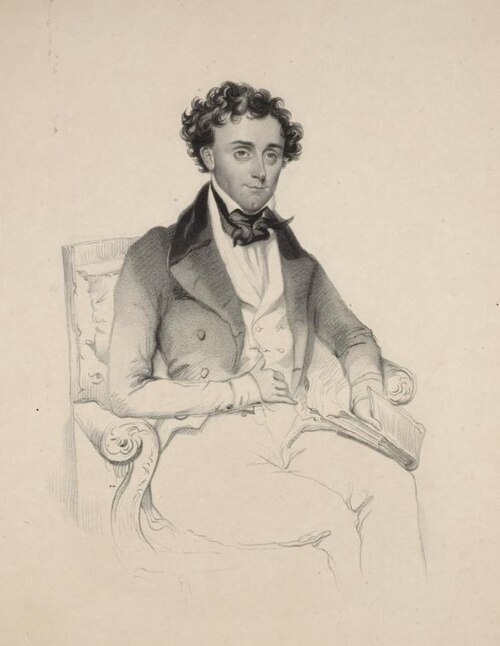
Who was Jim Crow? Jim Crow was a fictional character played by a white actor in blackface in the 1830s, called Thomas Dartmouth “Daddy” Rice. He portrayed an African American slave called Jim Crow. The name later got taken up and made famous in the Jim Crow laws.
The Jim Crow laws are not one law, but a collection of laws that were passed in many Southern states and enforced the racial segregation of African Americans in the United States of America from the 1870s until 1964. The beginning of the systems that would become the laws came in 1868, just after the American Civil War had been won by the North. The 14th Amendment was added to the US Constitution, and it gave all people born or naturalized in the United States citizenship and equal rights and protection. It included all freed slaves. It said that no state could make any laws that would infringe on the rights and privileges of the citizens of the United States. It was a joyous day, and it must have seemed the solution to all of America’s problems. Many of the Southern States had other ideas, though.
The Southern States had been defeated in the Civil War, for which they held a lot of resentment. They also still wanted to maintain white supremacy and the old racial hierarchy after emancipation. Their economy was based on slavery, and they saw freeing the slaves and giving them the rights of citizens was an economic and social disaster. They needed to find a way around the 14th Amendment. From the early 1870s, a series of laws were passed in different states that segregated African American people from white people. They were not allowed to attend the same schools, ride the same public transport, use the same restrooms or phone booths, or even stay in the same hotels. The segregation grew and grew. It would seem that this was directly against the 14th Amendment, but the people behind these laws claimed that they were not infringing on people’s rights. African Americans had the same rights as white people. They called the system “separate but equal”. Although, of course, it most certainly was not equal. Facilities for African Americans were underfunded, lower quality, and vastly inferior. There were also hidden types of segregation, such as preventing them from applying for certain jobs. There were a lot of demonstrations against the laws, and people were arrested for using white facilities. In 1892, Homer Plessy was arrested for riding in the white’s only car on a train, and he sued the government. The case went all the way to the Supreme Court, where he lost. The Supreme Court ruled that “separate but equal” was constitutional. That made it extremely difficult to challenge the laws, and there wasn’t another successful challenge until segregation in schools was challenged in 1954. Finally, the Supreme Court said that it was unconstitutional. The laws continued, though. Rosa Parks, the woman who famously refused to give up her seat to a white person on a bus, was arrested in 1955. Segregation was legally ended with the Civil Rights Act of 1964. There was an enormous effort in the Southern states to prevent these laws from passing. This was only 60 years ago, and it goes a long way to explaining a lot of the inequality in the US.
So, why were they called “Jim Crow” laws? In the middle of the 1800s, Jim Crow was used as a derogatory term for African Americans and a way to make them inferior. When the laws were enacted in the second half of the century, it was natural for people to use this word to apply to the government’s attempt to oppress and make African Americans feel inferior.
The name “Jim Crow” itself came from an actor called Thomas Dartmouth Rice. He was born in New York in 1808. He became an actor and travelled around performing in various plays. In 1828, he came up with a character called Jim Crow. He said that he came up with the character idea when he saw an African American enslaved stable boy who walked with difficulty, was ragged, but who sang while he worked. Rice performed in blackface, darkening his face with burned cork, and he developed a song and dance routine. He spoke in African American vernacular while he sang and danced. He is said to be one of the first white actors to wear blackface. His show was an unexpected hit, and he ended up doing sold out shows in New York. The song Rice wrote and performed in his shows became popular as well. These are some of the lyrics from his song and will give you an idea of what the character he created was like.
“Come listen all you galls and boys,
I’m going to sing a little song,
My name is Jim Crow.
Weel about and turn about and do jis so,
Eb’ry time I weel about I jump Jim Crow.”
His Jim Crow character became incredibly popular, and the name Jim Crow became a slur used against African Americans. His portrayal of an African American in this way and his success opened the way for copycats and the minstrel shows, where white people performed in blackface, sprang from this. These people played on the stereotypes and furthered the idea that black people were lazy and unintelligent. Rice became very successful with his act, but he always lived beyond his means, and he died in 1860. He died before the Jim Crow laws were thought up, and just because he created the character that the laws were named after doesn’t mean there wouldn’t still have been these laws if he hadn’t existed. It is difficult to judge him because he was a product of his times. Although there were a lot of people who knew better, so it doesn’t excuse him. And this is what I learned today.
Sources
https://teachdemocracy.org/online-lesson/a-brief-history-of-jim-crow
https://constitution.congress.gov/constitution/amendment-14
https://www.history.com/articles/was-jim-crow-a-real-person
https://jimcrowmuseum.ferris.edu/who/index.htm
https://en.wikipedia.org/wiki/Jim_Crow_laws
https://en.wikipedia.org/wiki/Thomas_D._Rice
Image By Unknown author – https://digitalcollections.nypl.org/items/510d47e3-306d-a3d9-e040-e00a18064a99, Public Domain, https://commons.wikimedia.org/w/index.php?curid=40943545