
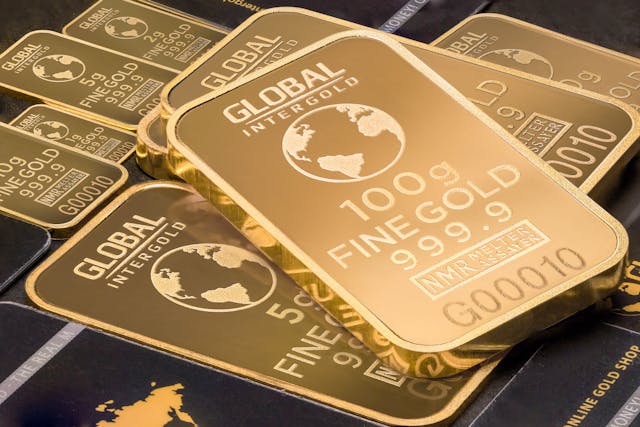
What was the gold standard? The gold standard was a system that tied the value of a country’s currency to a fixed amount of gold. It is often said that it ended in 1971, because that was when the United States stopped converting dollars into gold for foreign governments and central banks, which was the last major official link between money and gold under the Bretton Woods system.
The gold standard was a way of tying money to gold. Gold is valuable because it is rare, durable, and widely trusted, and it is also valuable because we believe that it is valuable. In the same way, people pay huge amounts of money for a painting because they believe it has that worth. Under a gold standard, whatever unit of currency a country used, one unit of that currency was worth a specific amount of gold. In principle, the money had to be convertible into gold at that set rate. (In the older “classical” gold standard, ordinary people could often redeem notes into gold; under Bretton Woods, redemption was mainly for foreign officials.) That meant a country could not create unlimited money without also risking a run on its gold reserves. It also made exchange rates more stable, because currencies were linked to the same underlying metal. However, if confidence dropped and many people wanted gold at the same time, the system could come under strain.
Modern money doesn’t work like that. Most countries use a fiat system of money these days. “Fiat” comes from Latin and is used for an order or decree. Fiat money is money that has been declared legal tender by the government. It is not backed by any precious metal and only has worth because the government accepts it for taxes and because everyone else accepts it in daily life. If trust collapsed and people stopped accepting the currency, the whole system would seize up. We obviously don’t do that, though, because we need people to believe that money still has value, so we can use the money we are paid to buy things. With fiat money, governments and central banks can increase the money supply, and exchange rates move based on many factors, such as inflation, interest rates, economic growth, trade balances, and demand for a country’s currency.
There are several problems with the gold standard, which is why no major country uses it today. The first is that, because the currency is tied to gold, changes in gold supply can affect the money supply. New gold discoveries can cause inflation, and gold outflows can cause deflation. Countries also cannot easily increase the supply of money to deal with recessions or financial crises, because they would risk breaking the promise of convertibility. Many economic historians argue that clinging too tightly to gold made the Great Depression worse than it might otherwise have been.
Another issue is that economies can grow faster than gold supplies. If money cannot grow with the economy, you can get long-term deflation. Deflation can sound nice, but it can discourage spending and investment because money becomes more valuable simply by holding it. People also hoard gold because it is seen as a safe investment, which can tighten the system further. Prices can end up being indirectly connected to shifts in gold supply and demand, even when nothing real has changed.
People sometimes argue that there isn’t enough gold in the world to support the enormous world economy we have today. This is a bit too simple, because a gold standard doesn’t need to “equal world GDP.” The real question is whether the financial system can keep its promise to convert money and bank claims into gold at a fixed price during a panic. Still, the basic point is true: the modern world runs on an enormous amount of money and credit, while the supply of gold is limited. If confidence breaks, the promise of conversion becomes extremely hard to keep, because far more people may want the “real thing” than any government could realistically hand over.
The gold standard wasn’t “started” in a single year, but Isaac Newton did play an important role in Britain’s shift toward gold. Britain was losing silver coins because they were worth more as silver than they were as coins, so people were taking them abroad, melting them down, and selling the silver. Newton was Master of the Mint, and in 1717, he recommended fixing the value of a gold guinea at 21 shillings, which was then set by royal proclamation. Britain was officially bimetallic at the time, using both gold and silver coins, but if the official rate between the two metals was slightly wrong, one metal would be undervalued, and people would export it or melt it down. Newton’s recommendation was meant to bring the official rate closer to the market rate, but Britain still drifted toward gold over time as silver tended to disappear and gold became the easier “default” standard in practice.
The system didn’t last forever. Many countries suspended gold convertibility during World War I. Attempts to restore it in the interwar period ran into trouble, and countries left it in waves during the Great Depression. After World War II, the Bretton Woods system linked many currencies to the U.S. dollar, and the dollar was linked to gold for foreign official holders. That arrangement finally ended in 1971 when the U.S. “closed the gold window,” and the world moved fully into the modern fiat era. And this is what I learned today.
Sources
https://en.wikipedia.org/wiki/Gold_standard
https://www.investopedia.com/ask/answers/09/gold-standard.asp
https://www.gold.org/history-gold/the-classical-gold-standard
https://en.wikipedia.org/wiki/Fiat_money
https://moneyweek.com/investments/gold/how-isaac-newton-created-the-gold-standard-by-accident
https://www.investopedia.com/articles/investing/071114/why-gold-has-always-had-value.asp
https://www.moneyandbanking.com/commentary/2016/12/14/why-a-gold-standard-is-a-very-bad-idea
https://elements.visualcapitalist.com/visualizing-how-much-gold-is-left-to-mine-on-earth
https://www.statista.com/statistics/268750/global-gross-domestic-product-gdp
https://moneyweek.com/investments/gold/how-isaac-newton-created-the-gold-standard-by-accident
Photo by Michael Steinberg from Pexels: https://www.pexels.com/photo/gold-bars-366551/