
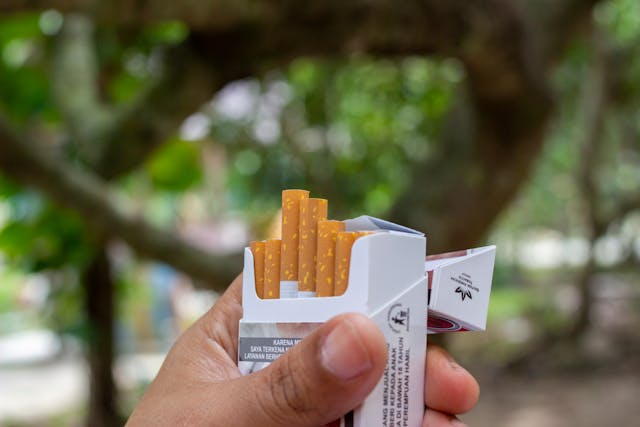
When did cigarettes become mainstream? Cigarettes increased in popularity after their manufacture was automated, but they became mainstream after World War 1.
Tobacco wasn’t known in Europe until the Spanish brought it back from South America in the 15th century. Before tobacco arrived, people in Europe had other drugs to smoke, but they were more for religious purposes and not used by general people. The majority of people had access to alcohol, and that was about it. Even when tobacco did arrive, it was too expensive for the majority of people for several hundred years.
Tobacco is native to South America, roughly where Bolivia is. It needs a warm climate (between 20 and 30℃), lots of sun (at least 8 hours a day), high humidity, and plenty of rainfall, but with a dry period just before harvesting so the leaves can ripen. It is native to South America, but there are places with a similar climate all around the world, and now tobacco is farmed in many different countries. China is the world leader, producing almost three times as much tobacco per years than the second largest producer, India. China produces about 48% of the total world tobacco output.
The leaf of the tobacco plant is prized because of its high nicotine content. It evolved to have so much nicotine as a defense against insects because nicotine is basically a poison. There are some insects that have evolved to be able to cope with high nicotine levels, but not many of them. There are other plants that produce nicotine, tomatoes being one of them, but they produce it in far smaller quantities than tobacco.
The indigenous people in South America have smoked dried tobacco leaves for thousands of years. The earliest archaeological evidence shows tobacco being smoked 12,300 years ago. People generally used it in religious ceremonies, but it was also used as a medicine and for pain relief. The Spanish encountered tobacco when Columbus landed in the Americas in 1492. The local people gave them tobacco as a gift, and they soon learned how to smoke it. Rodrigo de Jerez, a crewman for Columbus, ended up bringing tobacco back with him to Spain. In the years that followed, more Spanish people fell in love with tobacco and brought it back with them. They learned to make the clay pipes that the people in the Americas used to smoke the leaves. From Spain, the smoking of tobacco spread all over Europe in the next few years. South America was the only source of tobacco, and there were not many voyages, so tobacco was incredibly expensive. However, as the number of voyages increased, it developed into a tradable commodity. Then, in the 16th century, people realized they could make more money by growing tobacco than just bringing it across the Atlantic, and tobacco plantations began to develop.
Greater production of tobacco slowly brought the price down, and more people were able to smoke in Europe. The general way of smoking was still with a pipe, and as smoking tobacco had come to Europe via sailors, it tended to be sailors and soldiers who smoked a lot. Often during times of war, soldiers would smoke a pipe when they had time. And it was in the Crimean War (1853 – 1856) that rolled paper cigarettes were introduced to Europe. European soldiers were allied with soldiers from the Ottoman Empire who smoked their tobacco rolled in cigar leaves. When they ran out of leaves, they used newspaper or thin blotting paper. This way of smoking was much easier than using a pipe, and it started to catch on. There were more tobacco plantations, and more people were smoking as the price came down, but cigarettes were always hand-rolled. You could buy pre-rolled cigarettes, but they all had to be rolled by workers in a factory. The average person could roll about four cigarettes a minute.
Then, in 1881, James Albert Bonsack, an American inventor, came up with an automated cigarette rolling machine. His machine could produce 200 cigarettes a minute, the same as 50 workers. His machines spread, and other machines were introduced as well. The price of cigarettes started to fall rapidly, and the number of people smoking rose, but it was still not a large percentage of people. It would take a war to change that.
When World War 1 started, the powers that be felt that one way to help the soldiers with their nerves would be cigarettes, and there was a drive to have a pack of cigarettes and matches in every soldier’s ration pack. The tobacco companies loved this and they jumped right on board, sending free samples. Soldiers got so used to smoking that they brought the habit back with them after the war. Smoking became far more common than it was before, and cigarettes became mainstream. The same thing happened in World War 2 as well. In fact, the US only stopped putting cigarettes in ration packs in 1976. If we hadn’t had World War 1, a lot of people would probably still have smoked, but it wouldn’t have happened as quickly. And this is what I learned today.
https://totalleafsupply.com/how-tobacco-came-to-europe
https://themator.museum-digital.de/t/3047/3048
https://en.wikipedia.org/wiki/History_of_tobacco
https://en.wikipedia.org/wiki/Tobacco
https://www.quitsure.app/post/history-of-cigarettes-how-it-all-began
https://www.historyextra.com/period/stuart/did-people-smoke-anything-before-tobacco-was-discovered
https://en.wikipedia.org/wiki/James_Albert_Bonsack
Photo by Ahsanjaya: https://www.pexels.com/photo/a-person-holding-a-pack-of-cigarette-8637067/