
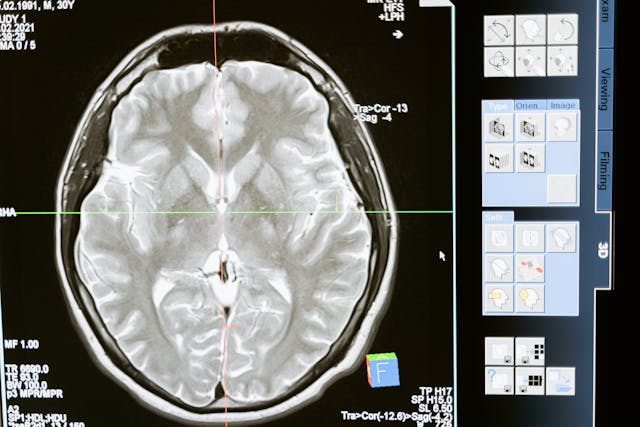
What is consciousness? According to Merriam-Webster, consciousness is “the quality of state of being aware especially of something within oneself, the state of being characterized by sensation, emotion, volition, and thought, the upper level of mental life of which the person is aware as contrasted with unconscious processes.” An often quoted way to describe consciousness is that there is ‘something it is like’ to be a creature. This idea comes from a philosophical paper by Thomas Nagel, called ‘What is it Like to Be a Bat?’ His point is not that bats lack consciousness. It is that even if bats are conscious, we cannot fully know what their experience is like from the inside, because their senses and their lives are so different from ours. Consciousness may not be easy to define, but it is recognizable as subjective experience.
If we want to sum up consciousness in a phrase, we could use, “I think, therefore I am.” But “what is consciousness?” is a very difficult question that no one has a single answer to. We think that we have consciousness, while most animals only have different levels of consciousness. We can test for consciousness, but in the end, we can only ever experience our own consciousness, and we must base all of our assumptions on that.
Consciousness is tricky, but we know that it happens in the brain because anesthesia can reliably remove awareness and stop a person from responding. Sleep is different. In sleep, the brain is still highly active, and in REM sleep, it can generate vivid dreams, which suggests that some forms of experience can continue even when the outside world is shut out. Under deep anesthesia, brain activity often becomes less flexible and less connected across distant regions, which makes experiences and later memory much less likely. An anesthesiologist aims for a safe combination of unconsciousness, amnesia, pain control, and immobility. There are many theories as to what consciousness might be, but there is no conclusive evidence for any of them. Here are just a few.
One theory is called the “Global Workspace Theory”. This theory suggests that responses in the brain get kicked up to the whole brain when there is a certain stimulus. For example, your feet have millions of touch sensors in them and can constantly feel the socks they are wearing and the floor underneath them, but you are not aware of it. Not until I tell you to think about it, and now you are very aware of your feet. My telling you to think about it was the stimulus that kicked it up to your whole brain. You can always see your nose; your brain just ignores it. This is another stimulus. Now you are thinking about how you can actually see your nose. This theory would make sense because we have too much information to be thinking about all of it all the time. Our brain needs to prioritize.
Another theory is called the “Higher-Order Theory”. This theory suggests that consciousness is when a higher level in the brain picks up something from a lower level, elevating it. For example, if you have an itch on the back of your hand, you might scratch it unconsciously. If it itches again, you might think. “Huh. My hand itches,” and scratch it. The itchiness of your hand has been elevated from unconscious to conscious. In other words, it is not only that there is an itch, but that there is an awareness of ‘there is an itch”. This could be because it requires a different reaction from the brain. The itch hasn’t gone away, so maybe there is a different problem we need to pay attention to.
A third theory is called ‘Integrated Information Theory’. It suggests that consciousness depends on how much the brain is working as a single, unified whole. It is not just that different regions are active at the same time, but that they are so interdependent that the system cannot be broken into separate parts without losing something important. For example, if you have a thousand lights set to switch on and off randomly, they would flicker insanely. If you integrate all of them, they will start to flicker in patterns because they are communicating. A possible example of this can be seen using anesthesia. Experimenters used magnetic stimulation to send an electrical pulse into a person’s brain and tracked it with an EEG. When the person was awake, that pulse was transmitted all around the brain, going through different sections. When the person was knocked out with an anesthetic, the pulse stayed close to where it entered the brain and stopped. In this theory, conscious thoughts can access parts of the brain that unconscious thoughts can’t. This could be because certain information requires a different level of reaction from the brain. It could be used for experiences that cannot be reduced to their parts.
The last theory I will look at is called the “Predictive Processing Theory”. At its most basic level, our brain is a prediction machine. It is always analyzing the information it has and trying to work out what will happen. It uses sensory information, past experiences, and anything it can get its hands on to make these predictions. Our consciousness could just be the brain’s best current model of what is going to happen.
There are many other theories. These are just a few. And if none of this is confusing enough, there is always the possibility that all of it is happening inside a very convincing computer simulation. And this is what I learned today.
Sources
https://www.u-tokyo.ac.jp/focus/en/features/z1304_00234.html
https://www.newscientist.com/definition/consciousness
https://www.newscientist.com/question/four-main-theories-consciousness
https://en.wikipedia.org/wiki/What_Is_It_Like_to_Be_a_Bat%3F
https://en.wikipedia.org/wiki/Consciousness
https://www.merriam-webster.com/dictionary/consciousness
https://books.google.co.jp/books?id=fBGPBRX3JsQC&pg=PA165&redir_esc=y#v=onepage&q&f=false
Photo by MART PRODUCTION: https://www.pexels.com/photo/technology-computer-head-health-7089020/
Pingback: #1671 Are animals conscious?