
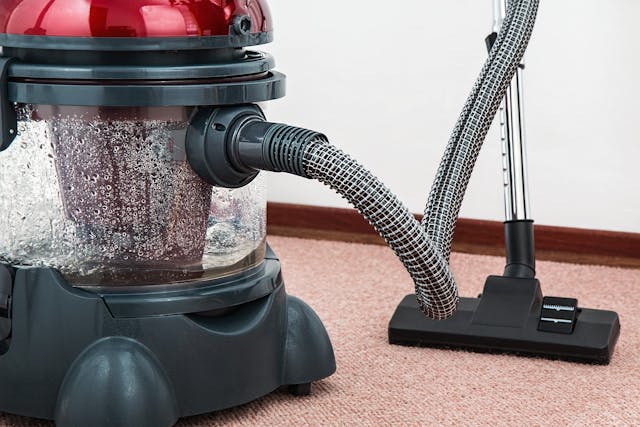
How does a vacuum cleaner create suction? A vacuum cleaner creates suction by making a pressure difference between the air in the vacuum cleaner and the air outside the vacuum cleaner. However, the dirt is not technically being sucked up into the vacuum cleaner but pushed up.
There are two kinds of vacuum cleaners currently available: ones that use bags, and the Dyson-type bagless cleaner. They use different methods to collect what they pick up from the floor, but they both create suction in the same fundamental way. A vacuum works in the same way that a drink can be pulled up from a glass through a straw, or air can be pulled into the lungs. In all of these cases, “suction” is really just a pressure difference.
Air is a fluid, which means it flows when there is a difference in pressure. Fluids naturally move from areas of higher pressure to areas of lower pressure. It is possible to force air the other way, but that requires added energy, such as with a compressor. Without anything actively pushing it, the net flow will go from high pressure to low pressure because the higher-pressure air is pushing harder. Pressure is a push in all directions, so if a low-pressure area is created inside a straw or a vacuum hose, the higher outside air pressure pushes air into that space. That moving air carries dust and debris along with it, until the pressures begin to equalize.
When you want to drink through a straw, you breathe in and suck the air out of your mouth. This lowers the air pressure in your mouth all down through the straw to the surface of the drink. The air pressure outside the straw is higher, and this pushes down on the surface of the drink. Before you made a low pressure area in your mouth, the two pressures were equal, and the drink didn’t move. When you make a low pressure area, the air pushes down on the drink, and nothing stops it from moving up into your mouth. The same thing happens in your lungs. When you breathe in, your diaphragm moves down, creating low pressure in your lungs. The air outside has higher pressure, and it pushes the air into your lungs through your nose and mouth. When you breathe out, your diaphragm moves up, creating higher pressure than the air outside, and the air is pushed back out.
A vacuum creates an area of low pressure with a fan. The fan has angled blades that pull air from the body of the vacuum and push it out of an exhaust pipe. The air pressure outside the vacuum is higher, and this pushes air in through the nozzle of the vacuum, and it carries pieces of dirt with it. It is similar to the way a river carries leaves and other things along in its flow. Many vacuums have a rotating brush that picks up pieces of dirt and raises them into the flow of moving air. The air flows through the vacuum bag, which has tiny holes that let the air through but trap the dirt.
A Dyson bagless vacuum cleaner also creates a low pressure area with a fan, but they don’t use bags. A problem that Dyson saw was that as vacuum bags get full, the microscopic holes can get clogged and the vacuum loses its suction power. He wanted to find a way around this. A Dyson, and most other bagless vacuum cleaners, also use a high powered fan to create suction. The air is forced out of the body of the cleaner, lowering the pressure, and out of an exhaust valve. Dirt is pushed up into the cleaner in the same way. The only difference is that rather than passing the air through a vacuum bag, they have cyclone chambers that spin the air very quickly. As the air spirals, heavier particles tend to fly outward, lose speed, and drop into the collection bin, while cleaner air stays closer to the center and continues onward. The clean air heads up, goes through a final filter, and is released from the vacuum. Because of the speed of the cyclone, bagless vacuums are supposed to be able to remove much finer particles from the air, particles that might pass through the holes in a regular vacuum bag. And this is what I learned today.
Sources
https://en.wikipedia.org/wiki/Vacuum_cleaner
https://home.howstuffworks.com/vacuum-cleaner.htm
https://news.samsung.com/global/a-look-inside-your-vacuum-how-it-works
https://electronics.howstuffworks.com/everyday-tech/cyclonic-separation.htm
https://www.woodsairmovement.com/en-us/news/the-basic-principles-of-air-movement
Photo by Pixabay: https://www.pexels.com/photo/black-and-red-canister-vacuum-cleaner-on-floor-38325/