
What is Monosodium Glutamate? Monosodium Glutamate (MSG) is a salt used to add flavor to food.
MSG is the sodium salt of glutamic acid. Glutamic acid is an amino acid that occurs naturally in lots of foods, such as tomatoes, cheese, mushrooms, and seaweed. In foods, glutamic acid often loses a hydrogen ion and becomes glutamate. If glutamate pairs with a sodium ion, it becomes monosodium glutamate—a salt, like sodium chloride is a salt. In the mouth, MSG dissolves into sodium and glutamate; the glutamate triggers umami receptors, while the sodium adds a little saltiness. In small amounts, this can be a very delicious pairing and is why it is used to flavor a lot of foods.
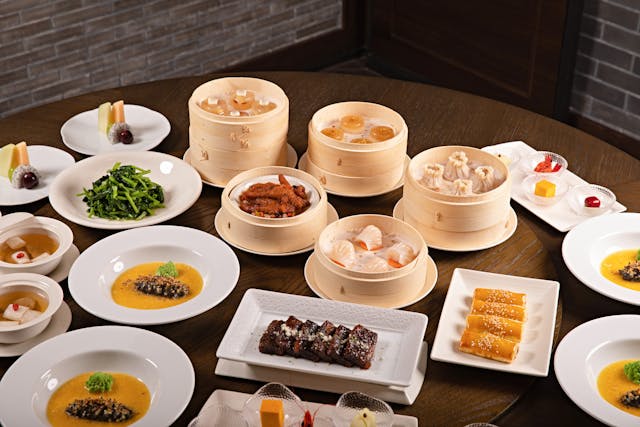
MSG is a very desirable flavor, and it features heavily in Asian cuisine. Early ketchup and Soy Sauce both have high levels of free glutamate that are produced during the fermentation process. A lot of Japanese cooking uses seaweed, which is also high in MSG. Some Western cuisines were also high in free glutamate, although you wouldn’t think so. Italian food, such as pasta, is a very MSG-rich food because of all the tomatoes, cheeses, cured meats, and anchovies they use. All of these foods are very high in MSG and produce the umami flavor associated with a lot of pasta sauces. French cuisine also uses a lot of natural MSG.
Up until 1908, if you wanted the umami flavor you get from MSG in your food, you needed to cook with ingredients that had a lot of it. In 1908, a Japanese biochemist called Kikunae Ikeda managed to isolate the Monosodium Glutamate, and he also came up with the flavor name “umami”. He was eating broth for his dinner, and he realized that it had a much more delicious flavor than usual, which he associated with the kelp and flakes of fish in it. He set out to analyze why that might be, and that journey led him to the discovery of MSG. He called it “Ajinomoto”, which translates as “the essence of flavor”, and he went on to invent a way to mass produce it. He started the company Ajinomoto to market his new product, and that company still exists.
Depending on our diet, we eat a fairly large amount of MSG every day. Natural MSG is no problem, but there is a lot of added MSG in foods. Snacks like potato chips and other processed foods have added MSG to enhance their flavor. The general consensus has become that MSG is dangerous and unhealthy, but this is not actually true.
The idea that MSG is bad for you comes from something known as Chinese restaurant syndrome (CRS). People who eat a lot of Chinese food, which is high in MSG, sometimes end up with headaches, flushing, sweats, and numbness. It has become commonly assumed that this is to do with the MSG in the food. However, people who eat a lot of pasta, or other foods with MSG, don’t report the same symptoms. And double blind experiments have shown that people who eat a lot of MSG don’t report any symptoms. MSG in itself is harmless.
People who consume a lot of MSG are usually consuming a lot of salty, fried food, and also a lot of Ultra-Processed food. This might have more to do with their symptoms than anything else. As MSG is used as a flavoring in many types of Ultra-Processed food, it is easy to think that it is the cause. And, it turns out, Chinese Restaurant Syndrome was based on a letter that appeared in the 1968 New England Journal of Medicine by Dr. Robert Ho Man Kwok. This was speculative, unproven, and probably caused far more by racism than it was by a concern over MSG. Over time, the ‘Chinese restaurant syndrome’ label picked up a strong xenophobic edge, and many writers now describe the term as dated and offensive. Ajinomoto is currently attempting to get “Chinese Restaurant Syndrome” removed from dictionaries.
Just like any salt and any flavoring, if you eat it in natural foods, it probably does no harm. If you take it out of the food and eat too much of it, it may do harm. And if you eat a large number of snacks and ultra-processed foods that contain MSG, the MSG is probably not the reason why you are having health problems. And this is what I learned today.
Sources
https://en.wikipedia.org/wiki/Monosodium_glutamate
https://en.wikipedia.org/wiki/Kikunae_Ikeda
https://foodsafetyplatform.eu/knowledge/articles/what-is-monosodium-glutamate-and-is-it-bad-for-you
https://www.uvahealth.com/healthy-balance/msg-facts-on-monosodium-glutamate
https://www.bbc.com/news/world-us-canada-51139005
https://www.pearlriverbridge.com/breaking-down-the-nutrients-is-soy-sauce-healthy