
What was the first police force? The first police force that we would recognize as similar to our own was most likely the Metropolitan Police, started by Robert Peel in 1829. It was the first full-time, professional, centrally organized police force for a major city, built around preventive patrols, with paid officers under a standardized chain of command.
Policing is not a new concept. Since the beginning, some people have tried to commit crimes and other people have tried to stop them. In Ancient China, these were prefects who were appointed by local magistrates and were tasked with enforcing the law. Babylonia used people with military backgrounds to arrest people responsible for crimes. In Ancient Egypt, different tribes were hired as guards and police. They were tasked with upholding the law and carrying out punishments handed down by judges. In Ancient Greece, slaves owned by the government were used as police. In Rome, the army was the main security force, but there were also local watchmen used to uphold laws. Every civilization that has existed has had some form of police to uphold the law and guard public property or events.
So, why is Robert Peel’s police force called the first “modern police force”? There are many reasons, but the main reason is that his police force was the first large urban force to move away from purely reactive policing and toward preventive policing, which is what today’s police forces are supposed to be.
Robert Peel was a British politician in the early 19th century. He had many positions, serving as prime minister twice. While he was home secretary, he founded the Metropolitan Police, the first modern police force. However, he had not been the first person to start a professional police force in the UK. That honor usually goes to the Marine Police Force, later known as the Thames River Police, which was set up in 1798 to protect merchandise at the Port of London. Goods were disappearing daily, and money was set aside to make a police force to stop the thefts. It could be said that the Marine Police were still a more limited and reactive police force because they had been set up to stop a specific series of thefts in one area.
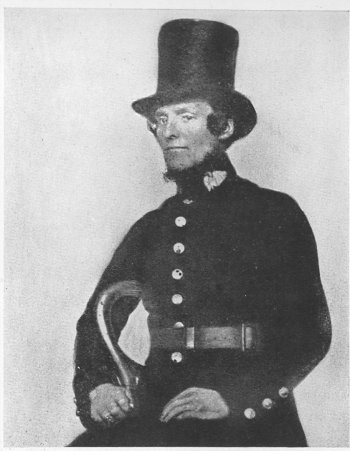
Robert Peel’s police force was the first force aimed at prevention on a city-wide scale. By the early 1820s, the Industrial Revolution was in full swing and London was growing in size daily. With the influx of new people, and the poverty that was endemic, crime rose as well. There was no way that the existing system would ever be able to keep up with the amount of crime. The night watchmen and parish constables that already existed were also often corrupt and inefficient. Robert Peel’s idea was not to have a force that was simply reacting to crimes, but a force that was preventing them by being visible. To this end, his police force had an instantly recognizable and standardized uniform. It was a blue uniform with a top hat. The uniform was purposefully blue because it was far removed from the red color the British army used at the time. The police were not armed, but were given a truncheon and a rattle or whistle to call for backup. They were civilians, and they were intended to be seen as impartial keepers of public order rather than as soldiers. They were given beats to walk so that they would be a very visible presence. This is another reason for the tall top hat, which became a tall helmet in 1863.
Everything was set out in the Metropolitan Police Act of 1829. The idea of the police was that they would uphold public order, and not simply be an arm of whoever was in power at the time. They were called Bobbies, after Robert (Bob) Peel, or Peelers. In the beginning, there were 8 superintendents, 20 inspectors, 88 sergeants, and 895 constables. It is difficult to find exact figures, but crime does seem to have dropped after the introduction of the Peelers. The chance that a Bobbie might see someone was a good deterrent. Not everyone was happy with the new police force, especially the parishes that felt they had lost power over their people. And some of the early policemen were not up to scratch. But things soon improved and the idea was rolled out over the whole of the UK over the next few decades. This model was copied widely because it was more organized, more visible, and more consistent than the old local system. And this is what I learned today.
Sources
https://www.nationalarchives.gov.uk/education/resources/crime-and-punishment-robert-peel
https://www.etymonline.com/word/police
https://www.greenburghny.com/385/Brief-History-of-Policing
https://en.wikipedia.org/wiki/Scotland_Yard
https://en.wikipedia.org/wiki/Robert_Peel