
How do astronomers find exoplanets? Astronomers find exoplanets by measuring tiny changes in starlight, seeing if a star shifts position in the sky, measuring radial velocity, using gravitational microlensing, and sometimes looking at the planet itself.
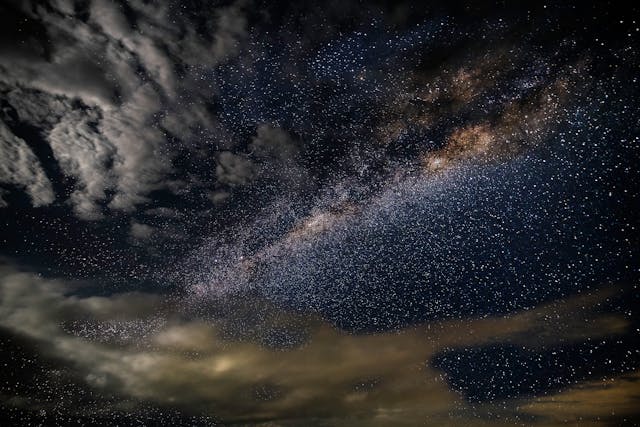
There are billions of stars in our Milky Way galaxy, and it is likely that a huge number of them have planets orbiting them. It is impossible to know for definite, but because stars form out of clouds of gas and dust, it makes sense that leftover material would often go into forming planets. NASA says that there is at least about one planet per star on average in our galaxy. The first exoplanets were discovered in 1992. As of March 12, 2026, astronomers had confirmed 6,147 exoplanets, which are planets outside of our solar system.
If we want to find out more about the planets in our solar system, we can look at them with powerful telescopes or send probes past them. For exoplanets, that is much harder. The distances are enormous, and in most cases we cannot simply point a telescope at another star and clearly see its planets because the star is so much brighter than the planets orbiting it. That is why astronomers need to use indirect methods as well as direct imaging.
The first method is to look at the brightness of the star. If an exoplanet is orbiting a star, every time it passes in front of the star from our point of view, the amount of light reaching Earth drops slightly. This is called the transit method. It shows that there is a planet, and by studying how much the light drops, astronomers can estimate the planet’s size. By timing how often the dip happens, they can also work out the length of the planet’s year and estimate how far it is from its star. This is one reason the transit method has found so many exoplanets.
The second method is to see whether the star shifts position very slightly in the sky. Stars are enormous compared with the planets that orbit them, but planets still have a gravitational pull on their stars. That means the star does not stay perfectly still. Instead, it moves a tiny amount as both the star and the planet orbit their shared center of mass. Measuring that side-to-side motion is called astrometry. It is extremely difficult because the movement is so small, but it can reveal a planet’s mass and orbit.
A third way is to look at the radial velocity of the star. This is closely related to the wobble idea, but instead of looking for the star to move side to side in the sky, astronomers look for the star moving slightly toward Earth and then slightly away from Earth. The star is really orbiting the center of its system’s mass, called the barycenter, rather than sitting exactly at the center. Because of the Doppler effect, when the star moves toward us its light is shifted a little toward the blue end of the spectrum, and when it moves away it is shifted a little toward the red end. These shifts are tiny, but if the star is observed carefully over time, they can be detected.
A fourth way is to use gravitational microlensing. This method depends a lot on luck. If a star closer to Earth drifts in front of one much farther away, the closer star’s gravity bends the light from the more distant star and makes it appear brighter, rather like a magnifying glass. If there is a planet orbiting the closer star, the planet’s gravity can add a brief extra blip to that brightening. The problem with this method is that the alignment has to be just right, and the event is usually a one-time opportunity rather than something astronomers can watch repeating over and over.
A fifth way is to try to look at the planet itself. The light from a star is usually far too bright to make out its planets, but astronomers can sometimes block some of the starlight with instruments such as coronagraphs and then use image processing to reveal faint worlds nearby. Modern observatories, including the James Webb Space Telescope, have used this approach to study some exoplanets directly, especially very large, young, hot planets that shine strongly in infrared light. This method is still difficult, but it is improving.
The methods for finding exoplanets are increasing and becoming more accurate every year. Astronomers can also use spectroscopy to work out what some exoplanet atmospheres are made of. This works because different chemicals absorb different wavelengths of light. We may one day find an Earth-like planet with atmospheric chemistry that strongly suggests life, but even if that happens, it will almost certainly remain far beyond our reach. And this is what I learned today.
Sources
https://www.wired.com/story/how-do-astronomers-find-planets-in-other-solar-systems
https://en.wikipedia.org/wiki/Exoplanet
https://en.wikipedia.org/wiki/Planet-hosting_star
https://en.wikipedia.org/wiki/Methods_of_detecting_exoplanets
Photo by Arnie Chou: https://www.pexels.com/photo/stars-and-clouds-at-nighttime-1229042/