
How does a jet engine work? A jet engine works by mixing fuel with compressed air and then burning it. The gas expands, shooting out of the back of the engine, which pushes the plane forwards.
At first glance, it would be difficult to understand how a jet engine moves a plane along. We naturally think that for a force to move something, it needs to be pushing off something else. The same way we have to push off the ground when we want to jump, or push off the side of the swimming pool when we want to start swimming. A pushing surface is not necessary, though, and it is how planes and rockets get their motion. They are following Newton’s Third Law of Motion. “To every action, there is always opposed an equal reaction; or, the mutual reaction of two bodies upon each other are always equal, and directed to contrary parts.” Or, more simply, “every action has an equal and opposite reaction.” When a rocket expels gas out behind it, the force of that gas pushes the rocket forwards with an equal amount of force. You can feel it yourself if you have ever fired a gun. The gas that pushes the bullet forwards, pushes the gun backwards with an equal amount of force. A jet engine produces thrust by accelerating a large mass of air backward.
So, for a jet engine to push a plane forwards, it needs to produce enough force backwards and it does this by compressing air and then burning it. A jet engine is made of four sections. The first section pulls air into the engine, the second compresses the air, the third mixes in fuel and burns it, and the fourth is a turbine that spins the compressor.
At the front of the engine is a very large fan. This is what you can see when you look at a jet engine. These fans are usually made of titanium or other strong metal, but they can still be broken by events like a bird strike. The job of this fan is to pull air into the engine. Depending on the size of the engine, they can pull in about two tons of air a minute. The majority of that air passes straight around the core of the engine and produces a lot of the force that pushes the plane forwards, similar to a propeller plane. However, about ten percent of that air goes onto the next stage.
The second stage is the air compressor. The compressor has multiple sets of propeller blades that push the air into the chamber. Air is pushed in much faster than it leaves and the pressure rapidly increases. As the pressure increases, the temperature increases. The air is compressed so the fuel can burn steadily and efficiently, producing a much stronger high-pressure flow when it is burned in the next stage.
The third stage is the combustion chamber. Jet fuel is sprayed into the hot, high-pressure air and then ignited with spark plugs. The jet fuel burns instantly and the gases created by the burning fuel and the compressed air rapidly expand. The engine is designed so the only way the gases can travel is backwards, out of the engine. The force these gases have as they expand out of the back of the engine push the plane forward in an equal amount. As the gases shoot out of the back of the engine, they pass through the last stage.
The fourth stage is the turbine, which is a very clever way of using the jet’s own power to power itself. The turbine is a propeller blade attached by a shaft to compressor and the fan at the front of the engine. The exiting gases spin the propeller, which spins the fan at the front of the engine sucking in more air, and the engine becomes self-sustaining. This obviously only works when the engine is up to speed. When the plane’s engines are first started on the tarmac, the plane uses the APU (a small engine in the tail) to supply electricity and compressed air. That compressed air drives a starter that spins the compressor in the main engine until there is enough air for the engine to run on its own. This small engine can also be used to restart the engines if they fail during flight for some reason.
By the 1920s, planes were getting faster and it was realized that a propeller drive aircraft would have trouble going faster than the speed of sound. Propeller tips can approach supersonic speed, creating shock waves and a big drop in efficiency. If planes were to go faster, a new type of engine was required. The first working jet engine was designed by Frank Whittle in 1928, but he was working on research, ideas, and designs that went back over 150 years. And this is what I learned today.
Sources
https://www.grc.nasa.gov/www/k-12/UEET/StudentSite/engines.html
https://en.wikipedia.org/wiki/Jet_engine
https://www.rrutc.msm.cam.ac.uk/outreach/what-do-we-do/how-does-a-jet-engine-work
https://en.wikipedia.org/wiki/Newton%27s_laws_of_motion
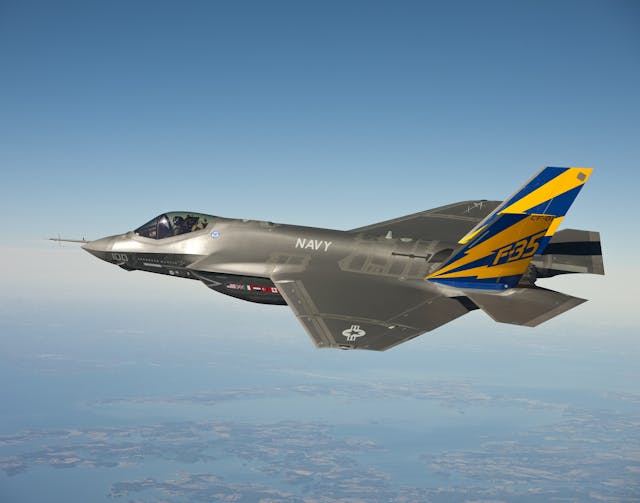
Photo by Pixabay: https://www.pexels.com/photo/grey-blue-and-yellow-navy-f-35-fighter-plane-flying-on-clear-blue-sky-78786/