
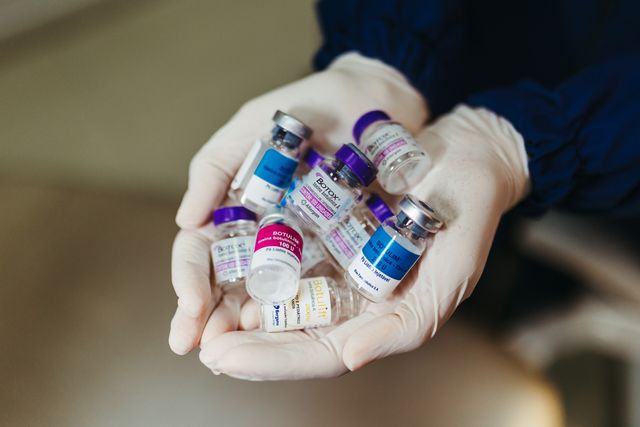
What is Botox? Botox is a drug made from the toxin produced by the bacterium Clostridium botulinum. Its name comes from botulium toxin.
We have most likely heard of Botox thanks to its role in plastic surgery, but there are several other uses for it as well. In plastic surgery, it is primarily used to flatten out wrinkles and to make a face look younger. It is also used to control excessive sweating, neurological disorders that involve muscle contractions, uncontrollable blinking, chronic migraines, and several other problems. It works on these things because it is a neurotoxin and it can paralyze certain muscles and block nerve signals.
Botox is made from the neurotoxin produced by Clostridium botulinum. This is the same toxin that causes botulism, which can be fatal. The neurotoxin is considered to be the deadliest known natural substance ever recorded. Or, rather cooly, “the most lethal nerve poison known to science”.
The botulism toxin works by stopping nerves from telling muscles to contract. If I want to pick up the coffee cup on the desk in front of me, my brain takes in information from the eyes to make sure where it is and then sends a signal to the necessary muscles. The electrical signal travels down motor nerves until it reaches the point where it joins the muscle. The nerve doesn’t actually connect to the muscle, there is a small gap. When the electrical signal reaches the end of the nerve, the nerve releases a neurotransmitter called acetylcholine, which allows the signal to cross the gap and enter the muscle. If there are no problems in my body, the electrical signal makes my muscles contract and I can pick up my coffee cup.
When botulism toxin enters the body, it gets into the ends of the nerves and cuts up the specific proteins that the nerve needs to create acetylcholine. Without the neurotransmitter, the nerves can’t communicate with the muscles, and I can’t pick up my coffee cup. That might not sound too bad, but if the muscles the botulism toxin is affecting are the ones you use to breathe, it is going to cause problems.
Botulism toxin is an enzyme rather than a regular poison. It cuts the proteins instead of having to bind to molecules. A small amount of the toxin can do a huge amount of damage, and it is very difficult for the body to get rid of. The toxin gets into the ends of the nerves and the body’s immune system finds it very difficult to get to. The body can clear it, as long as the does isn’t fatal, but it takes several months to do. And, once the toxin has been cleared, it takes a while longer for the nerves to recover.
So, what is Botox? Botox is a drug made using this toxin. If you eat food with Clostridium botulinum on it, the toxins can get into your stomach and then into your blood, and then they will get past around your body. They can end up in any of your nerves and if those happen to be the ones involved with breathing and swallowing, your time will be limited. The idea behind Botox is that a very minute amount of the toxin is injected into a specific area. If the doctor is careful, the toxin will stay in that area and deaden the nerves around it. This is the reason it is used in plastic surgery. We all have wrinkles that are caused by the muscles in our faces pulling the skin above them. They move in pretty much the same way again and again and over the years, the skin starts to crease. Botox injections into these areas stops the nerves interacting with the muscles and reduces the facial movements, reducing the number of visible wrinkles. It doesn’t last forever because the body will slowly clear it, but it can be good for several weeks. It can cause several problems. The Botox might leak into adjacent areas, giving that inability to make emotions that some plastic surgery is famous for. And, in the extremes, it could get into the blood stream and be dangerous.
The ability of Botox to reduce wrinkles was discovered in 1987. A Canadian ophthalmologist was using it to reduce eyelid spasms. The patient they were using it on pointed out that it also made the wrinkles around the treated area disappear. They did more experiments and found that it worked very well. It took until 2002 before the drug was approved for use. And this is what I learned today.
Sources
https://en.wikipedia.org/wiki/Botulinum_toxin
Photo by Jonathan Borba: https://www.pexels.com/photo/botox-flasks-on-doctor-hands-15688021/