
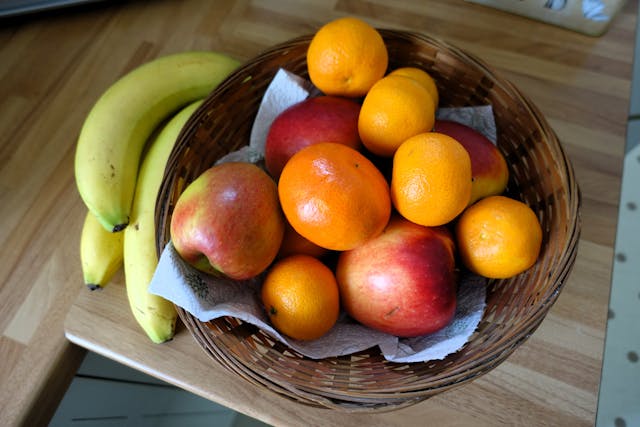
Why do apples ripen other fruits? Apples ripen other fruits because they release ethylene gas.
If you have a bowl of fruit on your table, you may find that all of the fruit ripens much faster if you have apples in the bowl. You can also ripen fruit like avocados more quickly if you put them in a bag with an apple. There is a saying, “one bad apple ruins the bunch,” which comes about because if you have one apple that is overripe, it can make all of the other apples ripen too quickly as well. In fact, apples are not the only fruit that have this property. Bananas and pears will also ripen other fruit. If you have a fruit bowl with bananas, apples, and pears, everything will ripen much more quickly than if you leave them out.
This happens because these fruits produce ethylene gas. Ethylene is a hydrocarbon, a natural gas that all plants produce as a hormone. They use it for many of their functions. It signals seeds to start germinating. It regulates when they open their flowers and when they shed their leaves. It is produced as a stress response to wounds, droughts, and pathogens. And it is produced to make fruit ripen. All plants produce it, but some plants produce more than others.
A fruit forms from the ovary of a plant. The ovules become seeds, and the ovary expands around them. In the beginning, the fruit is hard, starchy, and very acidic, which is deliberate because it makes the fruit difficult to eat and digest, keeping it safe until it is ready. When the seeds are ready, the fruit starts to produce ethylene. And ethylene is a very special gas because it is autocatalytic. That means it acts as a catalyst for itself, speeding up its own production. Quantities of ethylene start small and then rapidly accelerate. Ethylene triggers genes to begin the ripening process. The chlorophyll is broken down, producing other pigments that change the color of the fruit. They synthesize the sugars to make the fruit sweeter and less acidic. This produces volatile compounds that bring a sweet smell with them. They produce enzymes that break down the stiff cell walls to make the fruit softer. All of these things signal to animals that the fruit is ripe and ready to be eaten.
Because ethylene is autocatalytic, the presence of ethylene from any source will cause more ethylene to be produced. And that is the main reason why fruits like apples can ripen other fruits. Apples produce a lot of ethylene, and when you put an apple with other fruit, the ethylene from the apple will cause the other fruits to produce ethylene, and they will ripen, if they are not yet ripe, or overripen, if they are already ripe.
That being said, there are some fruits that apples don’t have any effect on. There are two types of fruit: climacteric fruits and non-climacteric fruits. Climacteric fruits, such as apples and pears, continue to produce ethylene and ripen after they have been picked. They can be picked when they are still a little unripe, and they will continue to ripen. Non-climacteric fruits, such as grapes and strawberries, only produce ethylene and ripen when they are attached to the plant. They get all of their sugars and ethylene through their connection to the parent plant. Once that is severed, they cannot ripen anymore. They have to be picked at prime ripeness because if you pick them when they are not ripe, that’s it.
A lot of fruit companies use ethylene to make it easier to transport fruit long distances. Companies pick climacteric fruits, particularly bananas, when they are still green and then ship them. This gives them more leeway to get the fruit to the market. Once the bananas arrive, the company pumps ethylene onto the bananas to make them ripen before they are taken to the shop. That doesn’t work with non-climactic fruit, such as pineapples, and they need to be refrigerated when they are shipped. Their containers also have the humidity controlled so the pineapples stay fresh. A pineapple will not ripen, and if you buy a hard, sour pineapple, it will not improve. The only thing that happens to pineapples is that they start to rot, which is why they get softer. And this is what I learned today.
Sources
https://www.sciencefocus.com/nature/do-apples-really-ripen-faster-if-you-put-them-next-to-bananas
https://www.postharvest.com/blog/what-is-ethylene-gas-how-it-affects-fruits-and-vegetables
https://en.wikipedia.org/wiki/Ripening
https://en.wikipedia.org/wiki/Ethylene_(plant_hormone)
https://www.britannica.com/question/How-do-fruits-form
https://www.thekitchn.com/how-to-ripen-pineapple-23656054
https://extension.umd.edu/resource/ethylene-and-regulation-fruit-ripening
Photo by Peter Fleming: https://www.pexels.com/photo/fresh-fruit-basket-on-wooden-kitchen-counter-35444907/