
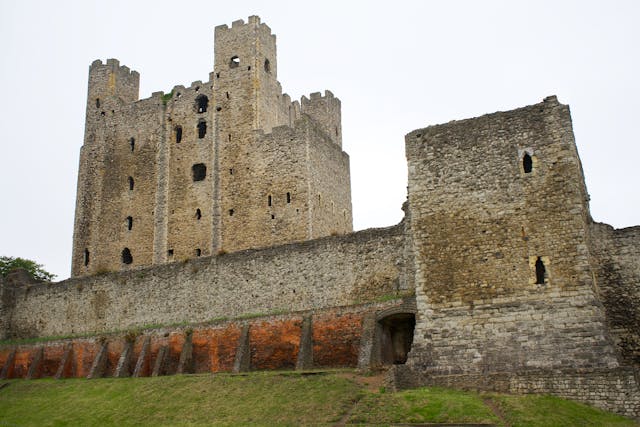
Why did people stop using castles? People stopped using castles because they were hard to defend as warfare changed, feudalism ended, they were expensive, and they were not very comfortable.
Castles evolved from forts, which in turn evolved from rough fortifications. In fact, the word castle comes from the Latin word “castrum”, which means “fortified place”. From ancient times, civilizations tended to be divided into groups of people, and each group had a place to shelter when they were being attacked. Over time, this place became more fortified and in the Middle Ages became a castle. It was a place where the farmers and regular people could run to hide, and the responsibility of its upkeep and their defense was from the person who owned the land they worked. As empires formed, forts were often built in strategic places to defend that area and the people who lived around the fort. Castles developed from these and they were always built in a strategic location. As groups unified and became countries, a castle was usually owned by the person who controlled the land in that area, but who would pledged allegiance to the monarch of the land, allowing the monarch to control all of the castles in their land. Battles tended to center on these castles as well. The only way one ruler could take over another ruler was by taking their castles, one by one. This often ended as a siege. Because that was how warfare had evolved, castles evolved to be able to withstand sieges for as long as possible. So, what happened?
There were several changes. The first thing that changed was the way wars were fought, and this came about in two ways. Firstly, towns were spreading out past the walls of the castles and belligerents often didn’t need to capture the castle to capture the town. And secondly, gunpowder (invented in China) spread west over time, and European cannon became effective siege tools by the 1400s. Having gunpowder doesn’t automatically mean you can overrun a castle, but it did help and it meant that castle walls needed to change. Before gunpowder, castles needed to withstand mechanical devices like trebuchets and simple ladders. After gunpowder they needed to be stockier, have thicker walls, and more angled surfaces to redirect the blasts. There is a limit to how thick you can build a castle’s walls and as weapons became more powerful, castles could only offer protection for a short amount of time. That meant that warfare moved from siege warfare where people hid in a well defended castle to more fighting on battlefields.
The second thing was the end of feudalism. Feudalism was a hierarchical system. The monarch owned everything and parceled the land out to their favorite nobles. The lord parceled the land out to smaller nobles, and on down until the workers got very small pieces of land. Those workers farmed the land, returning so much of the produce to the lord, who passed it up the chain. In return, the lord protected them when necessary, which necessitated a castle. The lord paid the monarch with taxes or with a standing army and the use of the castle. Once this system ended, governments centralized and started to rely on professional armies, which made castles unnecessary.
The third reason was the cost. It’s difficult to know exactly how expensive a castle was and it is difficult to convert that into modern money, but they were definitely not cheap. The price of a castle obviously depended on where it was built and the size and style of castle. Edward I’s castes, built between about 1280 and his death in 1307 cost between £2,000 and £27,000. In today’s money, that is (in 2026 dollars), that could be anywhere from $2 million to $40 million. Almost 30% of his yearly income. Castles also cost a lot of money to upkeep and they require a staff, who all need paying. Castles were a big part of a monarch’s expense, but they were not just useful as defenses, they were useful as status symbols and a show of power.
The fourth reason was comfort. Castles were made of stone as a practicality because it is a strong material. That means they are not built for style, and they are not built for comfort. Soldiers wouldn’t mind if they were just lying in wait for an enemy or fighting a siege, but wealthy people that had to live in them daily would probably prefer a normal house in town. As castles became less popular, probably in the 16th century, wealthy people and monarchs moved to much finer houses or palaces. These were built for comfort, and yet still managed to be status symbols. And this is what I learned today.
Sources
https://en.wikipedia.org/wiki/Feudalism
https://en.wikipedia.org/wiki/Castle
https://medium.com/@danatwilliams/why-we-dont-build-castles-anymore-379663688a1a
https://history.howstuffworks.com/historical-figures/castle7.htm
https://www.bankofengland.co.uk/monetary-policy/inflation/inflation-calculator
Photo by Mike Bird: https://www.pexels.com/photo/ruins-of-medieval-castle-12592536/