
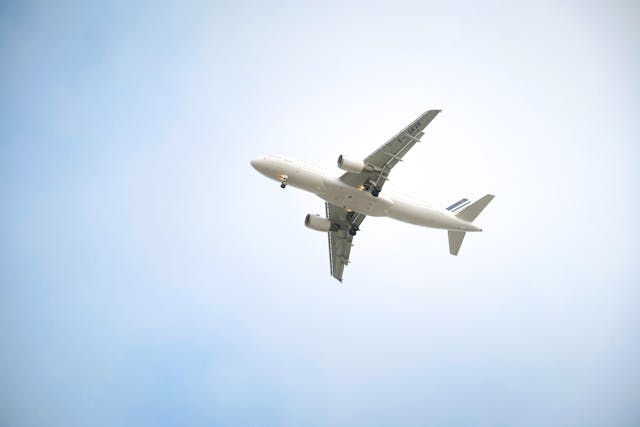
When did commercial aviation become common? Commercial aviation “took off” in the 1950s, but it wasn’t just changes in airplanes that made this possible, it was changes in society and the way people thought as well. And by common, I mean used by ordinary middle-class travelers.
Commercial aviation started not long after the Wright brothers took their first flight at Kitty Hawk in 1903. 5 years later, in 1908, Wilbur Wright carried the world’s very first airplane passenger on the same beach at Kitty Hawk. A few years after that, in January 1914, the first scheduled passenger plane took off. It was an airboat, and it carried one passenger across Tampa Bay in Florida. It didn’t fly far, it didn’t carry more than one passenger, and it stopped after four months, but that led the way, and more passenger planes appeared very rapidly.
In the 1920s, specialist commercial passenger planes began to appear. Not many people could afford to fly, and it was still fairly dangerous, but several airline companies appeared to meet the demand. KLM and Qantas still exist today. They weren’t safe, they weren’t pressurized, so they had to fly at low altitude, where there is more turbulence. They were noisy and cold, they had hard wicker seats, they couldn’t fly far and often had to stop to refuel, and they were expensive. However, they were novel, and they were faster than any other type of aircraft. Plus, flying is mundane for us now, but when it was new, everybody wanted to fly. Just like we would all love to go into space if we could afford it.
Flying was expensive, but the distances planes could fly slowly increased, and the number of passengers increased as well. In 1930, there were 6,000 airline passengers, and in 1934, that had risen to almost 500,000 passengers. The Douglas DC-3 was introduced in 1935, and it was a much larger plane that could carry 32 people at 330 km/h for 2,400 km. The number of passengers increased again, but then World War 2 arrived.
World War 2 greatly reduced commercial passenger travel for the duration of the war, but the research and advances in aviation that came about during the war meant that when it was over, more people than ever before were able to fly. What changes did the war bring about?
Obviously, the main advance that helped commercial airlines was the invention of the jet engine. With jet power, planes could not only fly further and faster, but they could also travel higher, which made the journey much smoother. Because they could fly further and faster, it also meant that airlines could fly more planes every day. That didn’t instantly make them cheap, but over the following few years, air travel began to get cheaper. Then you have a knock-on effect. The cheaper air travel gets, the more people fly, and the more people that fly, the cheaper air travel becomes.
The war also helped because an international network of airports had been constructed. Obviously, these were for the armed forces to prosecute the war, but after the war, they could be used as civilian airports. This came with air traffic controllers and radar systems. The war also produced an enormous number of trained pilots, mechanics, and air traffic controllers. Plane technology had improved as well. There were better radio navigation aids, communication systems, instrument landing systems, weather forecasting, and safety procedures. The war also helped with the international cooperation that any type of international flight needs. Things like standardized flight rules, international agreements, navigation standards, and route rights.
All of these things combined to make aviation safer as well. More planes were flying, and the whole system became better very quickly. There was better aircraft design, testing, maintenance, air traffic control, and operating standards. Safer planes also encouraged more people to fly.
A big change was in society and people’s way of thinking. After the war, there was a lot of postwar growth and prosperity. People could afford to travel further. Paid leave from work became a common thing as well, so people had the time and the money to travel. Going abroad had been something only the wealthy could do before the war, but now it was seen as something anybody could do. Travel and tourism also became an “industry” on the back of this newfound demand. The people fed the tourism industry, and the industry encouraged more people to fly.
Lastly, it is impossible to prove, but the severity of the war years might have persuaded people that they shouldn’t work so hard, and they should be allowed to treat themselves. There may have been some element of living for today. The number of passengers rapidly increased. In 1950, 28 billion passenger km were flown. In 1970, 382 billion passenger km were flown. And it just kept increasing. And this is what I learned today.
Sources
https://en.wikipedia.org/wiki/Commercial_aviation
https://airandspace.si.edu/explore/stories/evolution-commercial-flying-experience
https://www.airwaysmag.com/legacy-posts/how-global-travel-took-off
https://ntrs.nasa.gov/api/citations/19730024135/downloads/19730024135.pdf