
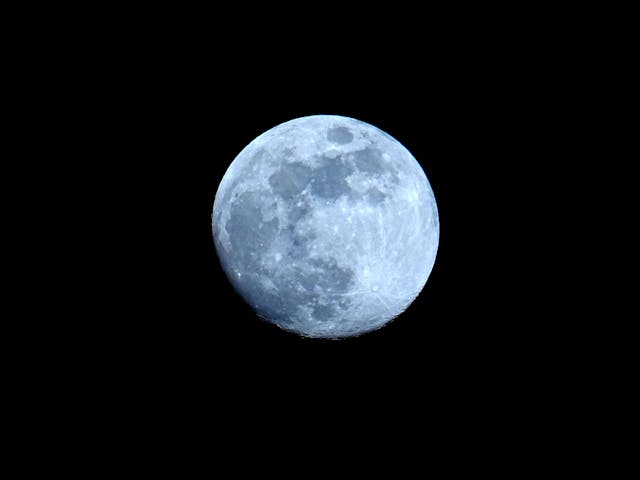
How could you build a base on the moon? There are several problems involved with building a moonbase, but the biggest one is how to get all of the materials up there. NASA has just announced that they are going to spend $20 billion to put a base on the moon within the next seven years (by 2033), which means there are a lot of problems they will need to overcome. Let’s have a look at some of them.
Getting all of the necessary equipment to the moon is probably the largest problem. All of the other problems can be overcome if you can get the material there. Currently, it is estimated that it would cost about $1 million to get 1 kg of material to the moon from Earth. That price could come down, but it is a good figure to work with. That means $20 billion could allow you to ship 20,000 kg of cargo, or 20 tons, which is not a lot. The necessary equipment will probably weigh more than this. The biggest problem with space flight is that if you carry more cargo, you need more fuel to carry it, and then you need more fuel to carry that fuel.
There are two obvious solutions to overcoming this problem. The first is a space station in lunar orbit. It is still expensive, but it doesn’t cost anywhere near as much as it does to get something to the moon’s surface. A lunar space station could be used as a landing base to prepare things before they are sent down to the moon’s surface. The second solution would be to 3D print as much as possible. There are two ways to do this. The first way is to ship the plastic or metal wire to be printed from Earth, then everything can be manufactured on the lunar space station before being shipped to the surface, or it can be printed on the surface itself. The second way is to 3D print with the material on the surface of the moon. Recent experiments have shown that it is possible to 3D print bricks using the loose regolith that lies on the ground. With a large lens to focus the light from the sun, it is possible to sinter the dust and shape it. It takes about five hours to print one brick, but if there were more lenses and perhaps an automated machine, it would go faster.
The other problems are still difficult to deal with, but if you can get materials to the moon or make them there, they are possible to overcome. One of them is the enormous temperature range on the moon. Because there is no atmosphere, the temperature can go from 127℃ in sunlight down to -173℃ in the shade. Any building needs to be very well insulated. Buildings also need to be shielded from solar radiation. Our magnetic field and atmosphere keep us safe from radiation, but the moon doesn’t have that luxury. Shields could be made to deal with that. Gravity is much lower on the moon, one-sixth of Earth’s, but there is not much that can be done about that. There is also no atmosphere, so everything needs to be completely airtight and strong enough not to succumb to the pressure difference.
Water, oxygen, and power seem to be some of the easier problems to solve. The moon has water frozen as ice at its poles. Any moonbase built near there could melt the ice for water. Oxygen can also be taken out of the regolith. It contains ilmenite, which can produce water vapor when mixed with hydrogen, and that water vapor can then be broken down into hydrogen and oxygen. The hydrogen could then be reused. Power is a little more complicated because a lunar day and night each last about two Earth weeks, although some places near the poles get sunlight for much longer. Solar power could still be very useful, especially with enough batteries.
Getting on and off the moon would be difficult, but not impossible. A craft designed to fly to the lunar space station would be enough, then another craft from there to Earth. In the beginning, not many astronauts will be able to go, and living conditions will be small, cramped, and probably dangerous. However, as time passes, it will get easier, and more people will mean it can be built faster. Technology will also improve alongside it, and there may be a way to have autonomous robots do a lot of the building. A target of 7 years to build a moonbase doesn’t sound too out there if the base is only for one or two people. Building a hotel that we can all go and visit might take an awful lot longer. And this is what I learned today.
Sources
https://www.bbc.com/future/article/20190201-how-easy-will-it-be-to-build-a-moon-base
https://en.wikipedia.org/wiki/Moonbase
https://www.scientificamerican.com/article/how-to-build-a-moon-base
https://www.iop.org/explore-physics/moon/how-could-we-live-on-the-moon
Photo by SevenStorm JUHASZIMRUS: https://www.pexels.com/photo/moon-378556/