
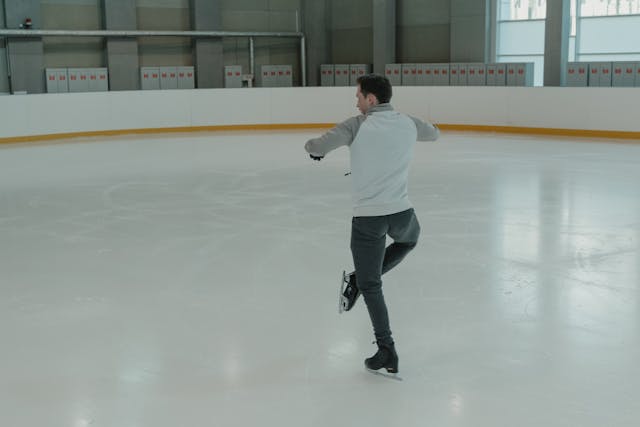
Why don’t figure skaters get dizzy when they spin? Figure skaters do get dizzy when they spin, but they learn to manage it because they have trained their brains and vestibular systems to cope with the sensation.
The sensation of dizziness comes about because of the way our balance system works. There are three parts that make up our balance system. These are the vestibular system in our ears, our visual system, and the proprioceptive system, which is made up of movement sensors in our skin, muscles, and joints.
The vestibular system is in the ears. It is made of three loops that point in different directions and are filled with fluid. Then there are two more fluid-filled sacs called the utricle and the saccule. When the head moves, the fluid in all of these tubes and sacs moves as well. There are microscopic hairs on the inside that detect the motion and translate it into electrical signals that are sent up the vestibular nerve. Movements side to side, up and down, and in combinations in between can all be detected by these systems. The brain takes the information from the vestibular nerve and compares it to the information coming in from the visual system to make sure they match. It also takes in sensory information from the body. With all of this information, the brain can work out whether the body is balanced, how it is moving, and what adjustments need to be made.
As long as all three systems are in agreement, the brain is generally okay. If there is a mismatch, though, it can cause problems. This is what causes seasickness. The vestibular system tells the brain that the body is moving, but the visual system tells it that it is not moving. The mismatch causes symptoms such as confusion and nausea. Virtual reality can be similar. The eyes tell the brain the body is moving, but the ears say it is not, or vice versa.
When someone spins around, the fluid in the ears moves. If they stop spinning, the fluid will keep moving for a while. This movement tells the brain that the body is still rotating and it tries to compensate, which causes the loss of balance. The eyes tell the brain that the body is no longer moving, and this conflict can cause nausea as well. Once the fluid stops moving, everything goes back to normal, but this can take a few seconds. Figure skaters do not have those few seconds to realign their balance because they need to move on in their routine. How do they cope?
Part of any figure skater’s routine is spinning jumps and spinning on the spot. Figure skaters have the same basic reaction that the rest of us would have to spinning around, and they do get dizzy, but they have learned to cope with it. They use several techniques. The first is simply learning to skate through the dizziness. Most of us would have trouble keeping our balance, but with practice, a figure skater can learn to stay upright and in control even while feeling disoriented. They also make their spins as smooth and even as possible to lessen unnecessary movement in the head and body, which helps reduce how disorienting the spin feels.
Another technique is to use the eyes carefully when coming out of a spin. A skater can quickly focus on a chosen point in the arena, and that helps the brain reorient itself faster. Having a fixed point to look at gives the visual system something stable to work with after all that motion. It does not eliminate dizziness, but it can help the skater recover more quickly and move cleanly into the next part of the routine. Focusing on a point also helps them stay vertical and keep control of their posture.
Through repeated practice, the brain starts to adapt to the conflicting information coming from the vestibular system and the eyes, and the skater generally experiences less dizziness overall. In other words, the brain becomes better at handling the sensory confusion caused by spinning. Experiments on figure skaters have shown that they have a far less reactive vestibular system than regular people. Their brains become used to the spinning and learn not to treat it as such a serious problem.
This does not mean figure skaters are immune to dizziness. If a skater takes a long break and then comes back to the sport, they will often feel much dizzier than usual during spins until the brain adjusts again. The ability is not magic. It is a trained response that comes from practice, repetition, and the body gradually learning how to cope with an unusual kind of movement. And this is what I learned today.
Sources
https://www.newcastle.edu.au/hippocampus/story/2021/dizzy
https://www.betterhealth.vic.gov.au/health/conditionsandtreatments/ears
https://www.today.com/news/beijing-olympics/figure-skaters-get-dizzy-rcna3047
https://www.si.com/winter-olympics/why-dont-olympic-figure-skaters-get-dizzy
https://www.nidcd.nih.gov/news/multimedia/medical-illustration-parts-ear
Photo by Tima Miroshnichenko: https://www.pexels.com/photo/man-in-white-and-gray-long-sleeve-shirt-ice-skating-6015887/