
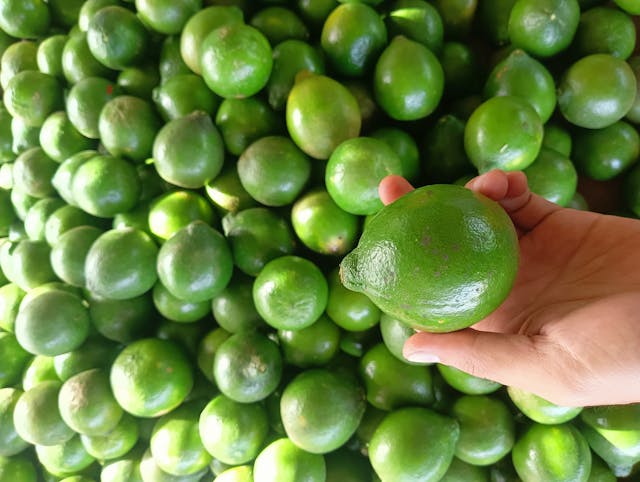
Why are British people called Limeys and Poms? British people are called Limeys because of the citrus juice British sailors drank to prevent scurvy, and they are probably called Poms because of Australian rhyming slang connected to the word immigrant.
There are many names for British people around the world. Some of them are affectionate and some of them are less so. Also, when people say “British” in this context, they often really mean English, rather than Welsh, Scottish, or Northern Irish. The two most famous terms are probably Limey, which is mostly used in the USA, and Pom, which is mostly used in Australia and New Zealand. Let’s look at where those two terms came from.
The term Limey comes from the practice of giving British sailors citrus juice to prevent scurvy. Scurvy was one of the great dangers of long sea voyages. It is caused by a lack of vitamin C. Without enough vitamin C, the body cannot make collagen properly, and that causes fatigue, swollen gums, joint pain, wounds that will not heal, bleeding, and eventually death. On long voyages, a ship could lose a huge number of its crew to scurvy.
People had known for a long time that fresh fruit and vegetables seemed to prevent scurvy, but they did not understand why. One of the first useful experiments was done by Sir James Lancaster in 1601. He commanded several ships and gave lemon juice to the crew of one of them. The men who received the lemon juice suffered far less from scurvy than the men on the other ships. However, the lesson was not immediately accepted by everyone.
A naval surgeon called James Lind carried out a more famous experiment in 1747 while he was on HMS Salisbury. He took twelve sailors who were suffering from scurvy and divided them into pairs. Each pair was given a different treatment. The pair who received oranges and lemons recovered most clearly. Lind had shown that citrus fruit could treat scurvy, although even after that, it took a long time for the British Navy to make citrus juice a regular part of life at sea.
When the Royal Navy finally did adopt citrus juice, it made an enormous difference. At first, lemon juice was commonly used, but later the Navy often used lime juice, partly because limes could be obtained from British colonies in the Caribbean. British sailors became associated with lime juice, and people began to call them “lime-juicers.” Over time, that was shortened to “Limeys.” The word originally referred to British sailors, but it later became a more general nickname for British people, especially in America.
The name Pom is more uncertain, but there is one explanation that has better evidence than the others. Pom, or Pommy, seems to come from pomegranate. That sounds strange at first, but the missing link is Australian rhyming slang. In Australia, immigrant was once turned into “Jimmy Grant,” because it rhymed. From there, the word seems to have moved toward “pomegranate” or “Pommy Grant,” and then it was shortened to Pom or Pommy. So, if this explanation is right, Pom is not really about pomegranates themselves. It is about wordplay.
There are other theories, but they are weaker. One theory says that English people were called pomegranates because they turned red in the Australian sun. That is possible as a folk explanation, but it is probably not the main origin. Another theory says that POM stood for “Prisoner of Mother England” or something similar, but there does not seem to be good evidence for that. It looks like one of those explanations people invented after the word already existed. Acronym explanations are often suspicious because many old slang words began in speech before anyone tried to explain them in writing.
Before Pom became common, new arrivals in Australia were sometimes called “new chums.” This meant people who had only recently arrived and did not yet understand life in Australia. The word chum originally came from chamber-fellow, meaning someone who shared a room. Over time, it came to mean a friend or companion. In Australia, a new chum was a newcomer, while an old chum was someone who had been there for longer.
British people have other nicknames as well. The French have called the British “les Rosbifs,” which means “the roast beefs.” This came from the stereotype that British people loved roast beef. In return, British people have called French people “frogs,” based on the stereotype that French people eat frog legs. These names are not especially kind, but they show how national nicknames often come from food, appearance, jokes, rivalry, or war.
That is what makes words like Limey and Pom interesting. They are not just random insults. They preserve little pieces of history. Limey carries the history of sailors, scurvy, long voyages, and the slow discovery that citrus fruit could save lives. Pom carries the history of migration, Australian slang, and the way a word can be twisted, rhymed, shortened, and passed around until almost nobody remembers where it came from. And this is what I learned today.
Sources
https://www.economist.com/asia/1997/05/22/those-whingeing-poms
https://en.wikipedia.org/wiki/Scurvy
Photo by Marwan Marwan: https://www.pexels.com/photo/fresh-limes-selection-at-a-market-stall-35867157/