
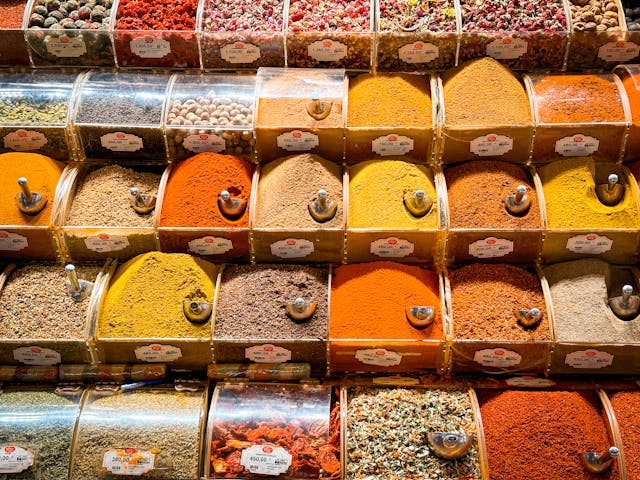
Why were spices so valuable in the past? You can buy a jar of spices today for a few dollars, but for a large part of history, some spices were extremely valuable. A few were even said to be worth their weight in gold. This was generally down to how hard they were to get, how many people were involved in moving them, and the image they carried.
These days, people think nothing of adding black pepper to a meal or putting cinnamon on ice cream. The majority of spices today are fairly cheap. The one spice that is still famously expensive is saffron, and that is because it is so labor-intensive to produce. Saffron comes from the red stigmas of the saffron crocus. Each flower only produces three of these tiny threads, and they have to be picked by hand. It can take tens of thousands of flowers to make even a small amount of dried saffron. That is why high-quality saffron can still cost thousands of dollars per kilogram. Still, the majority of spices are much cheaper now, but they weren’t always that way.
The main reason spices used to be expensive was rarity. Spices need certain climates and particular soils to grow, which meant that many of the most desired spices came from South Asia and Southeast Asia. Pepper came from India. Cinnamon came from Sri Lanka and other parts of Asia. Nutmeg and cloves came from islands in what is now Indonesia. If people in Europe wanted to use these spices, they had to get them from very far away.
That did not mean there was no sea trade at all. There were ancient sea routes across the Indian Ocean and through the Red Sea. However, for a long time, Europeans did not have a direct sea route to the spice-growing regions. Spices had to pass through many hands before they reached European markets. Merchants bought them, moved them, sold them on, taxed them, and protected them. Every step added cost. A bag of pepper might travel thousands of kilometers before it reached a wealthy household in Europe. By the time it arrived, it was no longer just a plant product. It was a luxury item with a long story behind it.
The Silk Road and the maritime trade routes grew partly because of this trade in silk, spices, perfumes, precious stones, and other luxury goods. However, the journey was difficult and dangerous. Ships could sink. Caravans could be attacked. Empires could block routes or demand taxes. A war, a storm, or a change in political control could suddenly make spices harder to get. This severely cut the supply. Demand was high, and when demand is high and supply is low, prices usually rise.
Spices had several uses in Europe. Obviously, they were used in food, but they were so expensive that only the wealthy could afford many of them regularly. The majority of people would have rarely seen them. Spices also became a way to show status. A rich person could use spices at a feast to show guests that they had money and connections. The spice itself tasted good, but the message was almost as important as the flavor.
Spices were also used in medicine, religious ceremonies, perfumes, and embalming. In the past, people often believed that strong smells and rare ingredients had special powers. Some spices were thought to warm the body, balance the body, or protect people from sickness. They were also used in religious rituals because fragrant and expensive materials seemed suitable for offerings and ceremonies. Ancient Egyptians used spices and aromatic substances in mummification as well. Again, these uses were mostly for people and institutions that could afford them.
Spices were so valuable that they also became commodities. They could be traded, stored, taxed, and exchanged. They were light, portable, and valuable, which made them very useful for long-distance trade. A small sack of spice could be worth a large amount of money. That is one reason European powers became so interested in controlling the spice trade. Portugal, the Netherlands, Britain, Spain, and France all competed for routes, ports, and islands connected to spices. The fight for spices helped shape the Age of Exploration and the early history of global trade.
So, why did spices become cheaper? Two main things happened. The first was that European sailors opened a direct sea route around the southern tip of Africa to the Indian Ocean. Once ships could sail from Europe to India and beyond, they could carry far more cargo than an overland caravan. The voyage was still long and dangerous, but it changed the balance of trade. Spices did not have to pass through as many middlemen, and supply increased.
The second thing that happened was that people began to grow spices in more places. This did not work for every spice, but over time, plants and seeds were moved to new colonies and new climates. Pepper, cinnamon, cloves, nutmeg, and other spices slowly became less rare. As supply increased, prices fell. The process was not instant. Spices were still relatively expensive for a long time. However, by the modern age, global trade, farming, shipping, and supermarkets had turned many former luxuries into ordinary kitchen ingredients.
That is why spices are so interesting. A jar of cinnamon or pepper looks small and ordinary now, but it carries a huge history. Spices helped connect continents. They made merchants rich. They encouraged exploration, empire, war, medicine, cooking, and global trade. What now sits quietly in a kitchen cupboard was once important enough to change the world. And that is what I learned today.
Sources
https://en.wikipedia.org/wiki/Spice_trade
https://www.bbc.com/future/bespoke/made-on-earth/the-flavours-that-shaped-the-world