
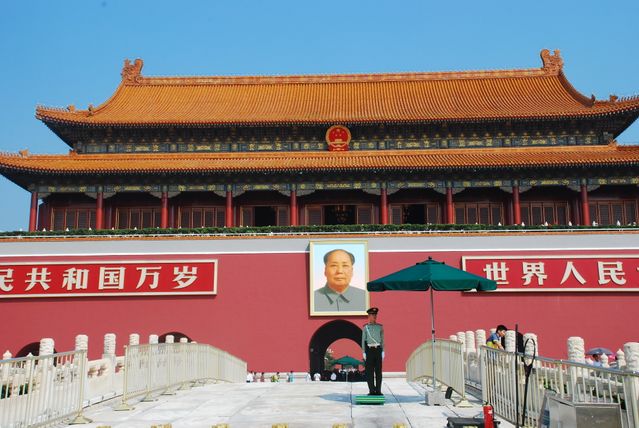
How did Chairman Mao take over China? Chairman Mao took over China mainly because the Long March consolidated his leadership, the Second World War weakened the Nationalists, he gained widespread rural support, and the Soviet Union supplied his forces with captured Japanese weapons.
The Long March is a very famous event in China that happened between 1934 and 1935. The Chinese Communist Party (CCP) was fighting the Nationalist forces for control of the country. The CCP had been in alliance with the Nationalists until 1927 when there was a violent purge of communists. Mao was one of several leaders of the CCP and in 1934 they decided to evacuate the area they were holding and relocate to the north. They moved in stages, but they marched a total of 9,000 km, crossing mountain ranges and other inhospitable terrain. The CCP troops were in different locations and Mao worked hard to make sure that the different forces came together until he had secured the party leadership. Some historians argue that Mao benefited from rival Communist forces taking more dangerous routes, which greatly reduced their numbers and weakened the influence of other leaders. Mao was carried on a chair by porters for most of this walk, but he managed to turn it into a legend later on. He talked of how he led his troops through terrible conditions, saving them. The Long March became part of his story.
The second part of how he took control over China was a combination of luck and good planning. After the Long March, the CCP established their headquarters in the remote northwest of China. The idea was to continue with a guerrilla war campaign. However, that was cut short by the invasion by Japan and the Second World War. This helped Mao tremendously because the nationalist forces of the government were heavily decimated by the Japanese forces and the occupation. While the Nationalists were being destroyed, the CCP built rural bases and extended their influence into the countryside. Mao was able to use these rural bases later on to mobilize the peasants. He promised them land redistribution and a fairer society if they supported him. Communist troops also developed a reputation for treating villagers more respectfully than many Nationalist troops, who were often poorly supplied and sometimes lived by taking food from the local population. The Nationalists found themselves fighting against an army of revolutionary peasants. Many Nationalist soldiers were poorly motivated conscripts.
Once the war with Japan was over, the CCP came out and started to take over. The Nationalists had been severely weakened by the war and they didn’t have much fight left in them. The CCP used guerrilla tactics, ambushes, and sabotage to eat away at the nationalist forces. They also used corruption. The Nationalist government was dealing with runaway inflation and terrible levels of corruption. The widespread corruption and inflation turned many people against the Nationalists, and the CCP exploited this dissatisfaction. They also used it to turn the soldiers because a lot of them hadn’t been paid. When money came in, the officers took their cut before it came down to the men and there often wasn’t enough left.
Another thing that worked in Mao’s favor was that many Chinese people had lost faith in the Nationalist government. During the war, the government printed huge amounts of money to pay for its military, causing hyperinflation. People’s savings became almost worthless and the cost of food rose rapidly. At the same time, corruption was widespread and many government officials became rich while ordinary people struggled. The Nationalists also relied heavily on forced conscription, which was deeply unpopular. Many soldiers had little desire to fight and deserted whenever they had the opportunity.
And the last thing that helped Mao was the Soviet Union. The Soviets liked the idea of having a communist ally on their southern border, so they helped the CCP as much as they could. They gave them large quantities of weapons and ammunition that they had taken from the Japanese forces that were beaten or surrendered. They also provided political and logistical support. These weapons and the weakened state of the Nationalists greatly improved the CCP’s chances of winning the civil war. Once they had, Mao was proclaimed ruler when the People’s Republic of China came into being on October 1, 1949. The Nationalist government fled to Taiwan.
Sources
https://www.ebsco.com/research-starters/history/maos-long-march
https://teachdemocracy.org/wp-content/uploads/2025/01/chinese-civil-war.pdf
Photo by มหฺ ปณฺฑิโต: https://www.pexels.com/photo/view-of-the-tiananmen-gate-in-beijing-china-32167833/