
Why don’t humans have whiskers? We probably lost our whiskers because, as our primate ancestors became increasingly reliant on vision and sensitive, manipulative hands, whiskers became less useful.
Whiskers are found in most groups of mammals, although in some species they have become greatly reduced or disappeared completely. Humans are one of the mammals that have lost specialized sensory whiskers.
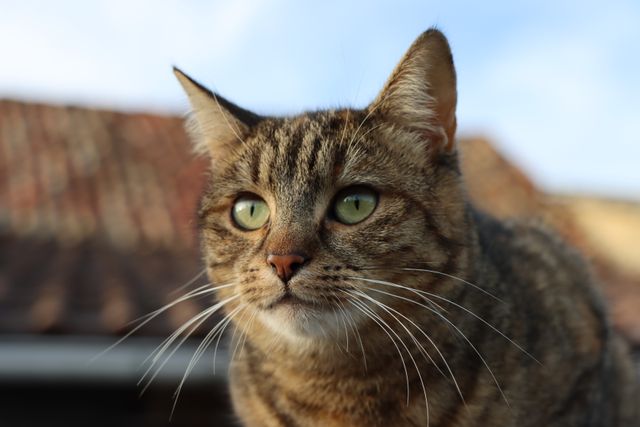
Whiskers are called vibrissae and they serve an important function. They are highly sensitive feelers that help all of these mammals feel their way through the world. A cat, for example, has whiskers on its face which are wider than its body. They can can use these feelers to sense what is around them, but also to tell if their body will fit through a space. If the whiskers fit, the cat will fit. Their whiskers are incredibly sensitive and they can even sense air vibrations and pressure changes in the air around them. They function almost like a mini radar. Cats have very bad close up eye sight, so the whiskers help them to feel what is near them, and they also operate a lot in the dark. They have good nighttime vision, but not perfect.
Whiskers are always very sensitive, but the mammals that have them use them for different purposes. Walruses have very thick and stiff whiskers on their muzzles. They use these for rooting through the dark ocean sediment on the sea floor to locate clams and other food. Seals have very sensitive whiskers that can detect and track the wakes and movement trails left in the sea by swimming fish in dark water. Rabbits use their whiskers to navigate through their burrows in the dark. And rats and mice use their whickers to scan obstacles and build a spatial map of their surroundings.
So, why don’t we have whiskers? Well, at some point in the far distant past, we did. All mammals share a common ancestor and if there are so many mammals that still have whiskers, it is logical to think that the common ancestor had them, and some species gradually lost them. So, why did we and these other few mammal species lose our whiskers?
Platypuses and echidna are related, and they lost their whiskers for pretty much the same reason. They evolved extremely sensitive bills. They have many mechanoreceptors in their bills. These can detect touch and vibrations in the water. They also have electroreceptors that can detect the electrical fields produced by the muscles of their prey. The platypus has about 40,000 of these! They don’t need whiskers because they have evolved something much more suited for their lifestyle.
Some dolphins develop whiskers before birth and may retain them briefly after birth, but the hairs are then lost. Dolphins don’t need whiskers because they evolved echolocation, which works at a much greater distance.
Baleen whales do still have whiskers but toothed whales don’t. Toothed whales probably lost them for the same reason as dolphins.
And that brings us to apes, including us. Why did we lose our whiskers? There are three main reasons. The first is that we evolved to be upright. We walk on our back legs, but even apes that walk on all fours sill climb trees vertically and sit upright. Whiskers are useful for animals that lead with and search for food with their faces. Apes don’t do that. We don’t need sensory devices on our faces because we prefer to keep them away from danger. That brings us to the second reason. We use our hands and our fingers a lot more to sense things. That keeps our faces at a safe distance and we can get our hands into spaces our faces wouldn’t fit. The brain space used by whiskers could have shifted to analyzing sensations from our fingers. And the third reason is that we rely far more on sight to analyze the area around us than many animals do. We can’t smell as well as animals do and we can’t sense the environment around us as well as animals can, but we have better daytime eyesight than any other mammal. And that much eyesight requires a lot of brain space. We evolved away from needing whiskers and evolved fingers and eyes that make them unnecessary. And that is what I learned today.
Sources
https://www.mcgill.ca/oss/article/did-you-know-history/whiskers-humans
https://www.physoc.org/magazine-articles/why-dont-we-have-whiskers
https://en.wikipedia.org/wiki/Whiskers
https://www.latimes.com/health/la-xpm-2011-mar-10-la-heb-penile-spines-20110309-story.html
Photo by Philipp Fahlbusch: https://www.pexels.com/photo/close-up-shot-of-a-cat-5344805/