
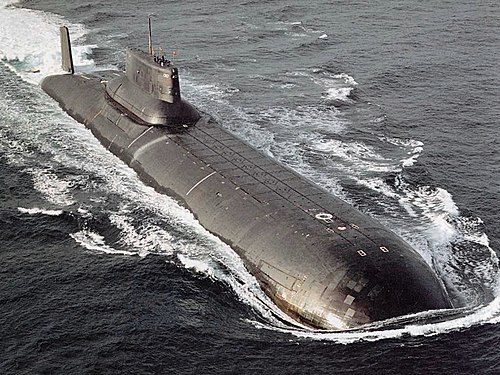
How long can a nuclear submarine stay underwater? A nuclear submarine can stay underwater for 25 years or longer. The people on the submarine cannot. The submarine can produce all of the water and oxygen they need, but people need more than just to drink and breathe.
A nuclear submarine can stay underwater for up to 25 years. The fuel in its reactor can keep working for a long time. If nuclear submarines were remote, they could stay down for decades, in theory. The only limiting factor is the people on board. Even with people on board, nuclear submarines can produce electricity and water. The only thing they can’t produce is food. For this reason, and the fact that human crews would go crazy if they were on a submarine for years, they tend to come back to shore once every three months or so.
Nuclear submarines can produce their own water, oxygen and scrub carbon dioxide from the air. They produce drinking water by distilling the salt out of seawater. Obviously, submarines are surrounded by water. They can use it to make drinking water but they need to remove the salt first. Seawater is pumped on board, pressurized, and heated until it becomes water vapor. The water vapor rises up and is channeled to a collecting tank for fresh water. The salt is left behind and removed.
Oxygen is produced by a process called electrolysis, which relies on the clean drinking water that has been distilled. Water is connected molecules of oxygen and hydrogen. To get oxygen for the crew, the submarine needs to separate the oxygen from the hydrogen. This takes energy, so an electrical current is passed through the water, splitting the molecules. The hydrogen is safely discharged and the oxygen is stored and released into the submarines atmosphere to keep it at about 18%. Oxygen on the surface is 21%, so it takes people a while to get used to the lower oxygen content. That is primarily done to reduce the risk of fires starting or spreading.
Producing oxygen is not the only task. We breathe out carbon dioxide and that needs to be removed. The submarine has carbon dioxide scrubbers that use sodium hydroxide and calcium hydroxide, known as soda lime, to trap the carbon dioxide. The moisture sailors breathe out also needs to be removed by dehumidifiers because it could damage the equipment.
If people only needed water and oxygen, the submarine could stay down for years, but people need to eat as well. Submarines come in a variety of sizes, but an average nuclear submarine can hold about two tons of food. That is enough to feed a crew of 150 sailors for 60 to 90 days. A submarine will have a crew of chefs that work shifts to keep a constant supply of meals available to the crew who also work shifts. The submarine can stay under for as long as there is food available. Then it will have to make harbor somewhere to replenish its food stores.
Food, oxygen, and water are the three things that sailors have to have, but they also need sleep. Submarines usually work in shifts where sailors have 8 hours on and then 16 hours of downtime. In their shift, they do their duties, and in their down time they may have to clean, they can study or just relax. However, there is not a lot of space on a submarine so they don’t have much space to just hang out. Each sailor will have a bunk, but they are very small. The down time is not all free time. Meals, training, maintenance, drills, qualifications, exercise, washing and many other things need to fit in this time. Most navies used to do six hour shifts and 18 hour days, where sailors would be on for six hours and then off for 12 hours. That caused a lot of problems because our circadian rhythms are set to 24 hours days. Submarines don’t have natural light, which can mess with our systems, but 18 hour days can cause difficulties and it can lead to fatigue, which affects people’s ability to do their jobs. Interestingly, the UK navy uses six hours on and six hours off shifts. That means sailors only get about four hours sleep at a time. This system reduces the number of people necessary on a submarine because you only need two shifts. However, researchers found that it leads to poorer sleep, poorer cognitive performance and physiological problems. American researchers found the same thing with their 18 hour days, so they switched to 24 hour days. I wonder if the Royal Navy will switch. And this is what I learned today.
Sources
https://www.wired.com/story/nuclear-submarine-astute
https://science.howstuffworks.com/transport/engines-equipment/submarine2.htm
https://science.howstuffworks.com/nuclear-submarine7.htm
https://submarinersstories.uk/quotes/midge-ure-how-the-different-shifts-work-for-and-aft
Image By Bellona Foundation? – Bellona Foundation, Attribution, https://commons.wikimedia.org/w/index.php?curid=5338641