
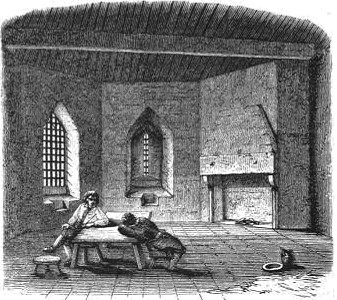
What was debtors’ prison? A debtors’ prison was, as the name suggests, a prison for people who were unable to pay their debts.
The majority of the world runs on the system of debt. People borrow money to pay for things they can’t afford at the time. Mortgages for houses and credit card for other payments. The idea is that you spread the money over the years of your life. The banks take a sizable percentage of the money in return. If you are unable to pay back the money you have borrowed, life will not be easy. A mortgage lender may eventually repossess your home, creditors may take you to court, and your credit rating can be badly damaged. You may end up being declared bankrupt and money can sometimes be taken directly from your wages. However, simply being unable to repay an ordinary debt won’t send you to prison. Defaulting on loans is a civil offense and not a criminal offense. The contract is between you and a bank or a credit card company and they can only use civil systems to make you repay the money. That was not always the case.
In the UK, bankruptcy laws have existed since 1542, but they only applied to people who bought and sold goods, or merchants. The rules were there to protect merchants from people who took their goods and then disappeared. It was not easy, even for merchants. The fees for declaring bankruptcy were about 20% of the annual wage at the time. This didn’t change until the bankruptcy laws changed in 1861. Up until then, anyone else who couldn’t pay back a loan was called an “insolvent debtor” and they could end up in prison.
Between the 14th century and the 19th century, many countries across Europe, and the United States had debtors’ prisons. If someone had a debt that they were unable to pay, they would be taken to court by the creditor. The court would almost always find in favor of the creditor and the debtor would be remanded to a debtors’ prison. They would be held there until the debt could be repaid in full. There was no relief. And this, of course, led to an obvious problem. If someone who is working is imprisoned, they have instantly lost their source of income. How were they supposed to repay their debt? If they were lucky, their family would be able to find the money, or they could earn a pittance from hard labor in prison and use that. It could take years. Some debtors were in prison for over thirty years. And they were also charged for food while they were in prison, which increased the debt. Many people even died in prison. Some of the prisons became famous because of their appalling conditions and the sadistic people who managed them.
One difference between imprisonment for debt then and now was that there were dedicated debtors’ prisons. This lasted in the UK until the law changed in 1869. The Debtors Act of 1869 changed the rules regarding people who couldn’t pay back debts. This did away with the now infamous debtors’ prisons but it didn’t stop people being sent to prison for debt. The law had an exception, which was Section 5. This section was a loophole deliberately left in by Parliament. Section 5 said that the court could investigate a debtor’s finances and if the judge was satisfied that the debtor had, or had had, the ability to pay back the loan but had not done so, they could be committed to prison for up to six weeks. The problem was, there were no more debtors’ prisons, so these people were committed to regular prisons. In 1905, 11,427 people were committed to prison for debt in England and Wales. There was also a practical problem with determining someone’s ability to pay. Imagine a laborer earns £2 this week and owes £1 under a court order. Technically, he has had £1. But he also has rent, food, children, heating and other expenses. Deciding that someone had the means was therefore not necessarily the same thing as saying that he had spare money sitting around and simply chose not to hand it over.
Surprisingly, people continued to be imprisoned for debt for another century. Thousands were still being sent to prison in the 1960s. Even on 15 October 1970, there were 406 people in prisons and remand centers in England and Wales who had been committed for debt, including people imprisoned for failing to make maintenance payments. The Administration of Justice Act 1970 finally abolished imprisonment for most remaining ordinary civil debts, although imprisonment remained possible in some exceptional categories. And this is what I learned today.
Sources