Animals

#1449 What is Peto’s Paradox?

What is Peto’s Paradox? Peto’s Paradox is an observation that the occurrence of cancer in an organism doesn’t increase in line with the number of cells that organism has. Because cancer is caused by mutations in cells, it would be logical that the more cells an organism has, the more occurrences of cancer it will

#1449 What is Peto’s Paradox? Read More »

#1444 Why don’t giraffes faint?

Why don’t giraffes faint? Giraffes don’t faint because they have a very strong heart and a very high blood pressure. If we bend over and then stand up again, we get a head rush. Sometimes it can be so bad that you faint. This is called orthostatic hypotension. Your blood pressure is set at the

#1444 Why don’t giraffes faint? Read More »

#1431 Were dinosaurs warm-blooded or cold-blooded?

Were dinosaurs warm-blooded or cold-blooded? The majority of dinosaurs were most likely warm-blooded. “Dinosaur” comes form the Greek “deinos”, which means terrible, and “sauros”, which means lizards. They are terrible lizards, which would lead many people to think that they were cold-blooded, as most lizards are today. Lizards have evolved to be cold-blooded because it

#1431 Were dinosaurs warm-blooded or cold-blooded? Read More »

#1426 What is the loudest animal?

What is the loudest animal? The loudest animal in the world is the sperm whale. An adult sperm whale can produce clicks that are 230 decibels. Sound is measured in decibels, which is a logarithmic system. A logarithmic system means that the next level is ten times higher than the previous level. So 20 dB

#1426 What is the loudest animal? Read More »

#1396 Why do bees buzz?

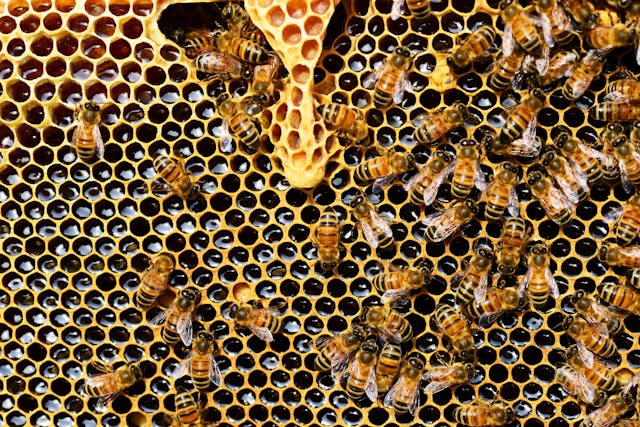
Why do bees buzz? Bees buzz because of the speed with which they beat their wings. All insects with wings make a sound, but some of them are too high pitched for us to be able to hear it. Sound is made by something vibrating and passing that vibration on to the molecules near to

#1396 Why do bees buzz? Read More »