
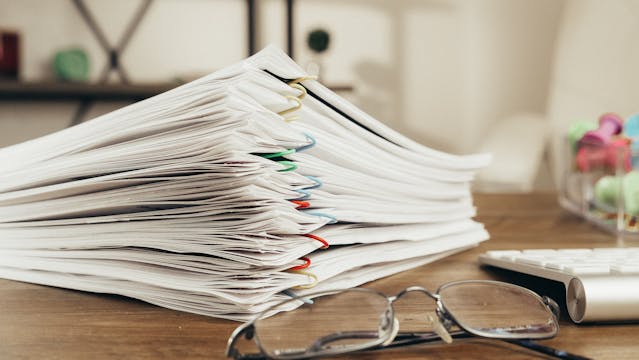
Depending on the size of the tree and on the type and size of the paper, it is often somewhere in the rough range of 10,000 to 20,000 sheets.
Paper is a thin sheet made from cellulose fibers, most commonly taken from wood. All plants contain cellulose. It is what gives plant cell walls much of their strength and helps plants stay upright. Cellulose is a polymer: long chains made from linked glucose molecules. Those chains bundle together into fibers, and in wood those fibers are held in place by another substance called lignin. The cellulose provides much of the support and strength, and the lignin helps lock the structure together.
Different plants contain different amounts of cellulose. Cotton is about 90% cellulose, which is one reason it is so useful for making thread and fabric. Wood varies by species, but it is often around 40–50% cellulose by dry weight. Because cellulose is tough and tightly bonded, most animals cannot digest it, even though it is made of glucose. Some animals, such as cows and other ruminants, can digest it because they host bacteria that produce enzymes capable of breaking cellulose apart.
Most paper is made from the cellulose in tree trunks. Trees are cut down, branches are removed, and bark is stripped away. The logs are shipped to a paper mill and chipped into small pieces. After chipping, the wood is turned into pulp, which means separating cellulose fibers from lignin. One common chemical method for strong writing and printing paper is to boil wood chips under high pressure with chemicals that dissolve lignin and leave the cellulose fibers behind. After that, bleach can be added if white paper is needed, because natural pulp is not pure white.
There is also mechanical pulping, where wood chips are ground to free the fibers with far less chemical removal of lignin. This produces more pulp from the same amount of wood, but the remaining lignin makes the paper less durable and more prone to yellowing over time. That is why mechanically pulped paper is common for things like newspapers.
Once pulp is ready, the rest is high-speed paper-making. The pulp is mixed with a lot of water, then spread in a thin layer onto a moving wire mesh. Water drains away and the fibers begin to interlock. The sheet is pressed to squeeze out more water, then dried with heated rollers. After that, it can be smoothed, cut to size, packaged, and shipped.
Paper can be made from many plant fibers, but commercial paper needs a reliable supply that can be harvested and processed efficiently. Many mills favor softwood trees such as pine, spruce, cedar, and fir. Softwoods tend to have longer fibers, which makes the resulting paper stronger. Hardwoods such as oak and maple generally have shorter fibers, which can help with smoothness and print quality, and they are often blended with softwood pulp rather than used alone.
There are environmental trade-offs. Papermaking uses a lot of water and energy, and plantations can reduce biodiversity compared with natural forests. Paper is also a major source of waste. Recycling helps, but paper can only be recycled a limited number of times because the fibers get shorter and weaker with each cycle.
So, how many pieces of paper come from one tree? A tree’s total weight is not a clean guide because wood contains water, bark, and compounds that do not end up in the final sheet. Even within the trunk, a significant portion is lost during pulping because lignin and other materials are removed. The yield also depends on whether the pulp is chemical or mechanical, and on what kind of paper is being produced.
A common rule-of-thumb figure is that about 24 trees are needed to make one metric ton of paper. A standard A4 sheet weighs about 5 grams. A metric ton is 1,000,000 grams, so one ton of paper is about 200,000 sheets of A4. If 24 trees make 200,000 sheets, then one tree makes about 8,333 sheets.
That number can still sit alongside the “10,000 to 20,000” estimate, because the assumptions change. If fewer trees are assumed per ton (because the trees are larger or the pulp yield is higher), the sheets-per-tree figure rises quickly. Thinner paper increases the count, while heavier paper decreases it. Even a small change in sheet weight makes a big difference: light newspaper-style paper yields far more sheets than thick drawing paper or card stock. In other words, the best answer is a range: thousands of sheets per tree, with 10,000 to 20,000 being a reasonable figure for many common cases.
https://twosidesna.org/US/paper-grows-trees-quite-fast
https://8billiontrees.com/trees/how-many-pieces-of-paper-in-a-tree
https://www.aymachinery.com/news/what-kind-of-trees-are-used-to-make-paper.html
https://workshopcompanion.com/KnowHow/Design/Nature_of_Wood/3_Wood_Strength/3_Wood_Strength.htm
https://workshopcompanion.com/KnowHow/Design/Nature_of_Wood/1_Wood_Grain/1_Wood_Grain.htm#structure
https://www.thoughtco.com/what-is-cellulose-definition-4777807
https://asm.org/lesson-plans/bacteria-that-help-and-hurt-cows
https://www.paperone.com/about-us/how-paper-is-made
https://www3.epa.gov/ttnchie1/ap42/ch10/final/c10s02.pdf
https://www.labelplanet.co.uk/glossary/bleached-paper
https://www.naturesweb.ie/Spring2007Page6.pdf
https://www.theworldcounts.com/challenges/consumption/other-products/environmental-impact-of-paper
https://www.jpa.gr.jp/en/env/proc/planting