
There are many reasons why bees swarm out of a hive. It could be climate change, disease, disturbances, lack of resources, or many other things.
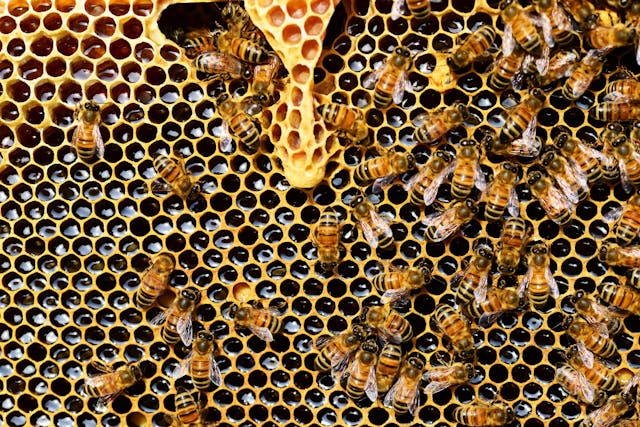
There are many different species of bees and many different types of colonies, but an average bee colony has about 50,000 worker bees, 100 drones, one queen, and lots of eggs and larvae. The worker bees fetch pollen, make honey, and do all of the work. The drones mate with the queen, and the queen lays the eggs. Sometimes bees abandon a hive and don’t return. This has been happening far more frequently in recent years than it used to.
Bees abandoning a hive shouldn’t be confused with swarming. Swarming is when half of the bees leave to colonize a new hive. Half of the bees and a queen suddenly swarm out of their nest and head off to start a new one. This helps avoid overcrowding and overuse of resources. It also helps a species spread to new areas.
However, sometimes an entire colony of bees will abandon a hive and not return. There is a phenomenon called Colony Collapse Disorder. Nobody knows the actual reason why it happens, and there are probably many different reasons, but here are some of the main ones. Some of the causes are natural. If a colony becomes too crowded, the bees can sometimes abandon it. Usually they swarm, but sometimes, if it is too crowded and uncomfortable, the entire colony might up and leave en masse. It is even possible that both halves of the colony swarm, each going off to start a new colony in a new place. It can also happen that when the colony swarms, not enough worker bees are left to build the nest and make honey. If this happens, the remaining bees can abandon the nest.
A bee colony can also be abandoned if food, water, and the resources they need run out. This can happen naturally, but it can also be caused by human interference. If we build, or farm, on land that the bees need, they will have no choice but to move. They can also abandon the hive if the queen gets too old to produce eggs or dies. If this happens, there are not enough bees to replace the ones that have died, and the whole colony may decide to move somewhere else.
Other natural factors can be predators, parasites, or diseases. There are several animals that prey on bees. These include birds, bears, raccoons, badgers, and other animals. These animals usually have thick fur or skin and can withstand the bees’ stings. If a new predator moves into an area, or the number of predators already in the area suddenly increases, bees may abandon a nest. The same can happen with parasites and diseases. The varroa mite will live on bees and bite them. It also feeds on their larvae. This produces malformation and weakness in the adult bees. Quite often, a hive will be abandoned if there is an infestation of these mites.
Let’s have a look at a few of the non-natural reasons. The first is human interference. Bees, like any insect or animal, need peace and quiet. Too much noise and too much light can affect them heavily. If we build or farm around a bee colony, the bees could be so disturbed that they abandon the hive.
Pesticides and fertilizers are also a reason. On one level, pesticides can outright kill bees, leading to an empty colony because all of the bees are dead. However, on another level, they can destroy a colony because of the gradual effect they have on bees. There is a type of pesticide called neonicotinoid that is sprayed on the soil and coated on seeds. This compound can work its way up through the plants and end up in the nectar that the bees eat. Neonicotinoids can impair bee reproduction, they can disrupt learning, and they can harm bee memory. All of these things together can lead to a collapse in bee colonies.
And the last reason I will look at is climate change. Bees need a certain temperature and a certain climate to be able to operate. If the weather gets too hot, or if there is too much rain or wind, the bees will not be able to find food or will die. Climate change will make it harder and harder for bees to survive in certain areas, and they will have to abandon their colonies to find new, cooler, and safer places. Hopefully, they will thrive in whatever new place they choose to go to.
https://www.science.org/content/article/pesticides-can-harm-bees-twice-larvae-and-adults
https://www.orkin.com/pests/stinging-pests/bees/honey-bees/honey-bee-colony
https://dengarden.com/gardening/Why-do-Bees-Leave-your-Hive
https://en.wikipedia.org/wiki/Colony_collapse_disorder
https://a-z-animals.com/blog/bee-predators-what-eats-bees
https://beeaware.org.au/archive-pest/varroa-mites/#ad-image-0
https://www.epa.gov/pollinator-protection/colony-collapse-disorder