
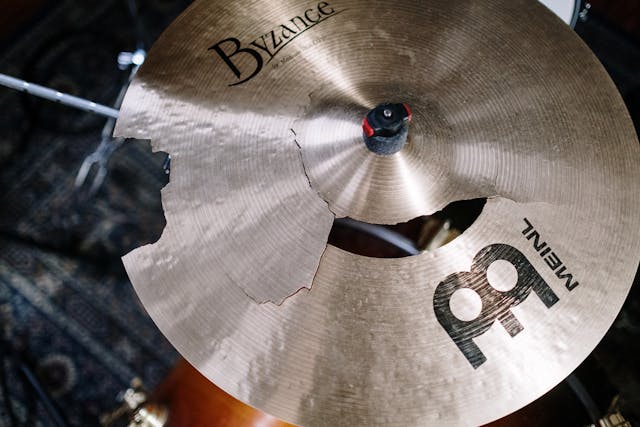
What is metal fatigue? Metal fatigue is where metal becomes weak and can break due to repeated stress.
Metals are very strong materials, and we rely on them in our daily lives. Without metals, we couldn’t have a lot of the things that we take for granted, such as tall buildings, bridges, and airplanes. We use metals because they need to support a lot of weight, or withstand a lot of stress, that materials like wood, brick, and plastic can’t. Rock is a very strong material, but it is incredibly heavy. Metal is both strong and light. However, metals are not invulnerable to damage and if given enough repeated stress over a long enough period of time, even the strongest metals will break.
Metal fatigue occurs when damage accumulates from repeated stress. These stresses can be thermal. When metal is repeatedly heated and cooled, it expands and contracts. This can lead to fatigue. The stress forces can be vibrational. Vibration that comes and goes, in a machine, for example, repeatedly bends or flexes the metal. It can be pressure forces, as with those an airplane will experience at different altitudes. And then there are bending forces, compression forces, rotational forces, radial forces, and many other kinds of forces. All of these forces stress the metal and, over time, can lead to metal fatigue.
Metal fatigue is difficult to spot because there are no external signs until it is quite advanced. It begins internally and then microscopic cracks appear. Those cracks slowly widen and increase until the metal is weakened to the point where it breaks. Different metals have different fatigue strengths, although some metals are more resistant to certain kinds of forces than others. Titanium alloys have excellent strength-to-weight and good fatigue resistance, and cast iron tends to have lower fatigue toughness because it’s brittle.
On a microscopic level, metal fatigue happens because of the way the atoms in metals form and because of the way they can move. Metals usually have atoms that form up in an orderly lattice, but all of these atoms don’t connect into one single object. The atoms form up into tiny crystal grains, and these crystals join together to form the solid metal. Inside the crystals, all of the lattices might appear perfect, but there are always defects. Sometimes, the lattices might be misaligned, similar to a wrinkle in carpet.
When the metal is stressed, it changes shape and the lattices of atoms, and the crystals slide past each other and then return to their original position. Metal is fairly plastic in this respect. However, some of the areas that were misaligned might not completely return to their original position. As the stress is repeated and the metal moves again and again, defects pile up at grain boundaries and other obstacles. Forces usually flow equally through a material, but they build up at places such as sharp corners, scratches, or obstacles such as the lattices that have piled up. The forces build up and with each movement, the atomic bonds between the lattices are stretched. Eventually, at a highly stressed spot, a tiny crack forms. This might only be the length of a few grains but, once a crack exists, stress concentrates at its tip and a few atomic bonds break each cycle, letting the crack grow.
The crack cannot heal itself and with each movement of the metal it gets worse. It amplifies the stress and that causes other cracks to appear in the same area. As the cracks increase and get larger, the stresses localize, worsening the problem. It can only last for so long before the metal is weakened to the point where it shears.
Metal fatigue is difficult to detect in its early stages, but it is not impossible. It can be detected by noise analysis because the damaged metal sounds slightly different when struck. It can also be detected with ultrasonic or X-rays.
The best way of dealing with metal fatigue is to change the design of the object in the first place. Adding fillets (rounded corners), smoothing transitions, and reducing stress concentrations, or moving where the stresses fall are some solutions. Polishing can help, as can improving the purity of the metal being used. Metal fatigue gets better as technology improves, but it is always there. And this is what I learned today.
Sources
https://thevarsity.ca/2023/03/22/what-causes-metal-fatigue
https://www.metalsupermarkets.com/what-is-metal-fatigue
https://www.metalsupermarkets.com/metal-glossary/fatigue-strength
https://www.industrialmetalsupply.com/blog/metal-fatigue
https://www.samaterials.com/content/fatigue-limit-and-material-performance.html
https://en.wikipedia.org/wiki/Fatigue_limitPhoto by cottonbro studio: https://www.pexels.com/photo/close-up-of-a-broken-drum-cymbal-5650533/