
Why do opposite sides of the brain control opposite sides of the body? Nobody actually knows the real reason why the left side of our brain controls a lot of the functions on the right side of our body, and the right side of the brain controls a lot of the functions on the left side of our body. However, there are a lot of theories. Let’s look at some of them.
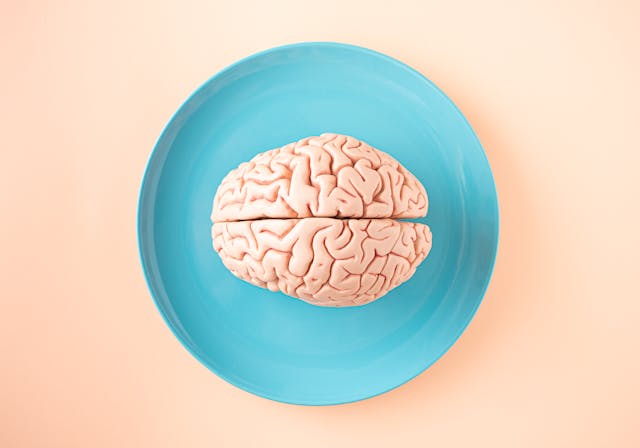
We have two hemispheres in our brain that are neatly divided down the middle and connected by the corpus callosum, which is a thick, C-shaped bundle of over 200 million nerve fibers. A lot of the things our brains do require sections in both halves to work together, but some things are more one-sided. Typically, the motor controls for the left side of our body are on the right side of the brain, and vice versa. Many sensory pathways cross as well. This crossing of nerve fibers from one side to the other is called decussation. The optic nerves from our eyes cross partly on their way to the brain, and hearing has a lot of crossed pathways as well. Smell, though, is different. The main smell pathway does not cross in the same simple way.
We are not the only creatures to have this feature. The basic pattern appears in vertebrates, which means animals with backbones. Invertebrates are not organized in the same way. Many of them have a nerve cord that runs along the underside of the body, whereas our main nerve cord runs along our back, inside the spine. The fact that vertebrates share this crossed organization means that this quirk of evolution must have happened a very long time ago, before all of the vertebrate animals split off from whatever common ancestor they came from.
One theory is that crossing the nerves might have aided survival. When fighting or escaping, an animal might be attacked on one side. If the left side of the brain controlled the left side of the body and that side of the brain was damaged, the animal might be unable to defend itself. If the nerve pathways are crossed, the animal might still have some chance of reacting after an injury. This is an interesting thought, but it doesn’t seem completely satisfying because invertebrates would also benefit from this. If crossing the nerves were such an obvious survival advantage, it is strange that it didn’t evolve everywhere.
Another theory is connected to vision. Our eyes reverse the image of the world on the retina, and the optic nerves partly cross at a place called the optic chiasm. Some scientists have suggested that crossed brain pathways may have developed because they helped early animals connect what they saw with how they moved. If something was seen on one side of the body, the animal had to react quickly with the correct muscles. This theory is attractive because vision is so important for movement and survival, but it does not explain everything. It also doesn’t fully explain why motor pathways, touch pathways, and other parts of the nervous system are crossed too.
The theory I find the most interesting is that an ancient ancestor of vertebrates twisted its body during evolution. Elephants and insects are similar in that they have a head at one end and a nervous system that runs the length of the body. The difference is that an insect’s nervous system is on its underside, where the organs of a vertebrate would be, and a vertebrate’s nervous system is on its back, along the spine. The twist theory suggests that, in some ancient ancestor, the front part and the back part of the body became rotated in relation to each other. The animal didn’t just flip over like a pancake. It was more like the head and body ended up twisted, and later development smoothed the outside back into a symmetrical-looking animal.
This would explain why the brain seems reversed. It would also help explain why the optic nerves cross while smell does not cross in the same way. It might even help explain some other strange differences between vertebrates and invertebrates, such as the position of the nerve cord and the direction of some internal systems. It is not a proven answer, but it is a neat explanation because it connects several mysteries together instead of treating each one separately.
The only thing missing is why this twist might have happened in the first place. There are several possibilities. It could have made movement easier for early vertebrates. A nervous system running along the top of the body may have been better for controlling the muscles used to swim or later to walk. It may also have kept the nervous system safer. Most animals swim, crawl, or run horizontally, and keeping the main nerve cord away from the ground could have been useful. Once the bony spine developed around it, the nervous system became even more protected.
The fact that all vertebrates have this general pattern shows that it developed very early. Evolution also doesn’t need to have a reason in the sense that something planned it. A mutation or body-plan change happens, and if it gives an organism a better chance of surviving and reproducing, it can spread. The crossed organization of our nervous system may have been useful, or it may have been a side effect of some other useful change. Either way, it was carried forward into fish, amphibians, reptiles, birds, mammals, and eventually us. And this is what I learned today.
Sources
https://faculty.washington.edu/chudler/split.html
https://en.wikipedia.org/wiki/Contralateral_brain#Twist_theories
https://en.wikipedia.org/wiki/Axial_twist_theory
Photo by Amel Uzunovic: https://www.pexels.com/photo/brain-model-on-plate-15410078/