
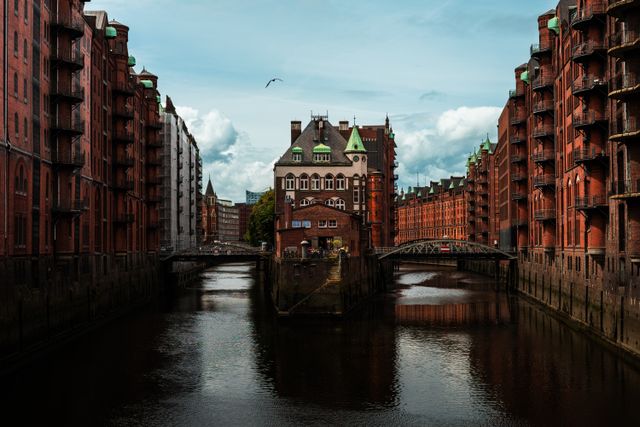
What was the Hanseatic League? The Hanseatic League was a powerful trade network in Europe that stretched from eastern England to the heart of Russia. It existed from the 12th century until the 16th century, when it gradually faded away.
The word Hanseatic came from the Old German word “hanse”, which meant a band, a troop, or a crowd. The “atic” part is just a suffix that makes it into an adjective in English.
The Hanseatic League began as a group of traders on a small route that gradually stretched until it pretty much spanned Europe. In the early Medieval days, the countries in Europe traded with each other, and the Baltic Sea was a very convenient way of shipping goods. They all traded in timber, furs, salt, silver, iron, squirrel skins, and many other things. Towns on the coast of the Baltic Sea, and some of the islands, became important centers in the trading network that was developing. Visby is a good example. It is on an island just off the coast of Sweden in the middle of the Baltic Sea, and hoards of gold coins from the Arab world and Central Asia have been found there, showing how important it was. Another important town was Lubeck, located on the German coast, in the west of the Baltic Sea. Much of the trade between the Baltic and western Europe passed through these cities, and the people there became very wealthy. Lubeck was in a very important location because it was between the Baltic Sea and the North Sea. It allowed access to northern France and all of Great Britain. Lubeck was built by Henry the Lion in 1159, and it rapidly became a very important city.
Trade between these cities began to flourish, and the merchants started to travel together for protection. They began forming guilds that they called “hansas”. These guilds not only offered them protection from danger, but also protection of prices and trade routes. They were able to protect trading privileges, regulate commerce, and defend their interests. The idea of the guild began to spread, and merchants in different cities made deals to protect their interests. In some places, they were allowed to trade without being taxed, and in others they were allowed to sell their merchandise freely while local merchants were more controlled.
Hamburg and Lubeck signed a formal agreement to control access to the North Sea and the Baltic sea in 1241, and this is said to be the real beginning of the Hanseatic League as a political and economic power. Other cities liked the protection the league offers and they start to join. Within 40 years of the Lubeck – Hamburg deal, the league has spread to many countries across Europe. The League established permanent trading posts, called kontors, in important foreign trading cities such as London, Bergen, Bruges, and Novgorod.
In 1356, the League held its first general assembly in Lubeck. It was called the Hansetag. By this time, there were 200 towns that belonged to the League. It dominated the trade in timber, grain, fish, wax, fur, salt, cloth, and other things. They even went to war for their interests. At its height, the Hanseatic League handled most of the trade in northern Europe despite never becoming a country. Then, in the 1500s, their power began to decline. The national governments in individual countries had become stronger, and trade routes were changing. New sea routes to Asia and America reduced the importance of trade across the Baltic Sea. The final meeting of the League was held in 1669, but only a few cities remained, and then it quietly disappeared.
The Hanseatic League may have only been around for a few hundred years, and it was set up to protect the interests of the merchants, but it left a surprising number of legacies that we can still see today. It helped create some of the wealthy trading cities that we can still see in Germany, such as Hamburg and Bremen. Hamburg’s official name is actually the “Free and Hanseatic City of Hamburg”. It standardized international weights. The guilds needed to protect what they were selling, so merchants agreed on common weights, measures, contracts, and trading customs. The League showed that trade could be stronger than kingdoms. It had no king, no emperor, no permanent army, no taxes, yet it had enormous economic power and even defeated Denmark in a war. The power of trade. It encouraged the growth of the middle class. Before the League, people who had wealth were either noble, owned land, or both. The League showed that merchants could become enormously wealthy through commerce. These merchants became powerful in banking, industry, and politics. The League connected Europe economically, it influenced the trading organizations that came after it, and it helped to spread ideas. And this is what I learned today.
Sources
https://en.wikipedia.org/wiki/Hanseatic_League
https://www.bbc.co.uk/news/extra/A2MFANtn3Z/hanseatic_league
https://en.wikipedia.org/wiki/Baltic_Sea
https://www.britannica.com/topic/Hanseatic-League
https://en.wikipedia.org/wiki/Hamburg Photo by Sameh Swaiss: https://www.pexels.com/photo/a-canal-with-buildings-on-both-sides-of-it-27856847/