
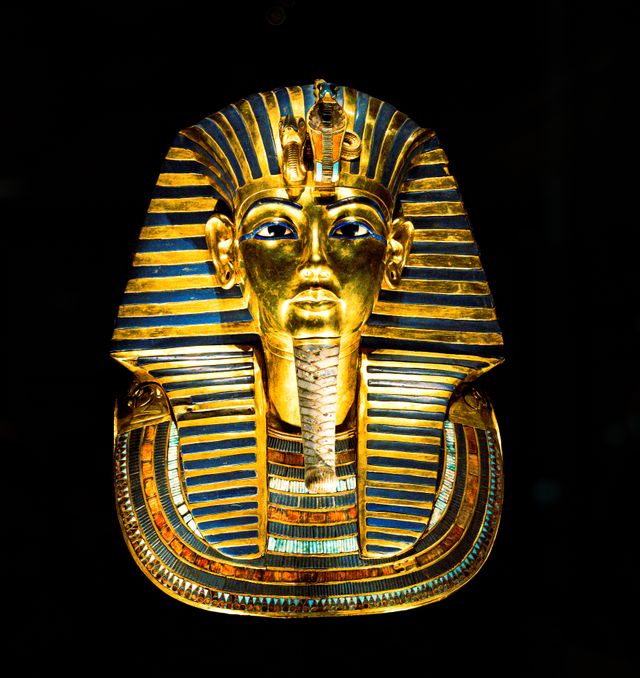
How did Howard Carter find the tomb of Tutankhamun? Carter was able to excavate part of the Valley of the Kings that had been untouched by other archeologists and discovered the entrance to Tutankhamun’s tomb under some ancient workmen’s huts.
Howard Carter had always had a love of Egypt and Egyptology, but he wasn’t an archeologist when he went there. He traveled to Egypt in his late teens and found work as an archeological artist. He was a very talented artist. He gradually learned the skills of archaeology and excavation. He found a job as the inspector of antiquities, but he lost this job and decided to become an archeologist.
Most of the tombs of the known pharaohs had been discovered by the time Carter became an archaeologist. Only two of them had been untouched. The rest had been looted, probably not long after they had been sealed. Evidence of another pharaoh called Tutankhamun had been popping up in the center of the valley, but his tomb hadn’t been found. Carter felt he knew where it might be. In the middle of the Valley of the Kings was an area covered in rubble and huge quantities of debris from thousands of years of floods. The artifacts were concentrated there and Carter felt that it might be a good location. The problem was, he didn’t have the money for the excavation or the permission to excavate on that land.
In 1915, the American Theodore Davis who owned the concession rights to excavate the land, died and gave the rights up. He famously said that he believed the Valley of Tombs to be exhausted. Carter managed to get the patronage of a rich aristocrat, the Earl of Carnarvon, snapped the rights up and he set to work on the new land. The problem was, before any excavating could be done, they needed to clear the area. It had been the dumping ground for all of the rock and earth dug up by other archeologists when they uncovered their tombs. Then, below that, were at least two thousand years of flood debris that would need to be shifted. He had to wait for World War 1, but when it was over, he hired a team of Egyptian laborers and set to work. It took them about a year and they moved thousands of tons of rubble.
The workers kept going down and clearing rubble and flood debris until they came across the ruins of some ancient workers’ huts. These were associated with the nearby tomb of Ramesses VI. Carter thought that if anywhere was going to be a good candidate for the location of Tutankhamun’s tomb, then this was probably it. Then, rather inexplicably, he spent four years investigating other things. Was he nervous? One theory is that he wanted to wait until Lord Carnarvon was growing tired of paying for the expedition and use the discovery to get more money and more years of finance out of him. That is possible. Carter spent a few years cataloging other finds, examining already other found tombs, and a lot of extremely valuable work, but he didn’t set foot in the place he suspected.
Then, in 1922, Carnarvon summoned Carter to tell him he had had enough. Carter told him about his suspicions and Carnarvon agreed to fund him for one more season. Carter returned to Egypt and began to search in the area below the ancient workers’ huts they had discovered. It didn’t take long for them to uncover a step cut into the bedrock under the huts. This step turned out to be the start of a staircase going down. They dug the staircase out and came across a sealed door. All tomb doors were sealed with a distinctive seal and the ones on this door were intact, meaning it had never been opened. Carter broke the seal and peered inside to check if he was right. When he knew that he was, he rehid the tomb and cabled for his sponsor Carnarvon to join him. That took until late November, but when he was there, they went into the tomb.
They passed through the first door, down a corridor, and came to a second sealed door. They broke through this and they were in Tutankhamun’s tomb. The first people to enter it in over three thousand years. The room was full of artifacts. They were not neatly arranged, but piled in, as though in a storeroom. There were pieces of chariots and all of the things Tutankhamun would need for the afterlife.
Carter continued excavating the tomb over the following years and also catalogued and recorded all of the pieces he found. It took him over eight years. There were so many things and he had to carefully remove each of them before he could move on, that it took him nearly two years to reach the burial room where Tutankhamun’s sarcophagus was. He finally entered that room in February of 1924 and laid eyes upon Tutankhamun.
Carter realized, after he had catalogued everything, that the tomb had actually been looted. A fair few boxes were empty of their contents. He could also see evidence of the looters. That was why many of the artifacts were arranged so wildly. However, it looks like the officials in charge of the tomb had noticed and they had resealed the tomb. Then, thanks to its fortunate location, the entrance was covered by flood debris and looters forgot where it was.
The almost untouched tomb was the find that all Egyptologists had prayed for. It taught people so much about the ancient Egyptians. Altogether, there were over 5,000 artifacts in the tomb. Howard Carter had found it through analyzing the ground and a lot of hard work and perseverance. And this is what I learned today.
Sources
https://www.smithsonianmag.com/history/how-howard-carter-discovered-king-tuts-golden-tomb-180981052
https://en.wikipedia.org/wiki/Discovery_of_the_tomb_of_Tutankhamun
https://en.wikipedia.org/wiki/Howard_Carter
https://www.history.com/this-day-in-history/november-4/entrance-to-king-tuts-tomb-discovered Photo by Ayman Mahmoud: https://www.pexels.com/photo/golden-mask-of-tutankhamun-ancient-egyptian-art-34784469/