
Why is Dick Turpin so famous? He started to become famous during his life, but his real fame came through books written long after his death. He was not the person he is thought to be today.
If you are not from the UK, you have probably never heard of Dick Turpin. If you are from the UK, then he is one of our national figures. He is known for being a highwayman, but he was more than just that. A highwayman was a thief who stole from travelers. They usually travelled by horse and they stole from walking travelers, but they were more famous for stopping stagecoaches and stealing from the inhabitants. The word “highwayman” comes from 1617, but they existed for centuries before that. For as long as highways have connected towns, thieves preyed on the people who used them. They often had a romantic image, but they were anything but.
Dick Tupin is famous for a few things. He is often thought to be a lovable rogue, a kind of Robin Hood who stole from the rich and gave to the poor. He is thought to have treated his victims politely and kindly. He was said to be a charming gentleman highway man. He is famous for a 200 mile overnight ride on a horse called Black Bess. And he is famous for his death. He was hanged in 1739 and he said to have treated the hangman by jumping off the ladder to the gallows. However, it turns out he was not the person he is thought to be.
Dick Turpin was born in 1705, and his father was a butcher. When Dick was old enough, he became a butcher as well. He had his first contact with crime in the early 1730s when he started butchering stolen deer for a gang called the Essex gang. By 1734, he was a close associate of the gang, and he became involved in their activities. He was involved in several robberies before the gang broke up in 1735. The police captured and executed most of the gang, so Turpin decided to try his luck as a highwayman.
His career as a highwayman was surprisingly short, lasting from 1735 to 1737. He worked with an accomplice for a while before they broke up. He found another accomplice, who was accidentally shot. Then he found a third accomplice, who Turpin himself shot. A reward for his capture was posted and he finally gave up his exploits as a highwayman in 1737, changed his name to John Palmer, and went into hiding. Not very good hiding, though, because he carried on stealing horses and was finally arrested in 1738. He was tried, found guilty, and sentenced to death. He died a common thief, so why has he become so famous, and why has his reputation been improved.
His reputation began shortly before he was executed. The reward for him was high and sensationalized stories about him were already spreading in the newspapers. There were ballad about him. He was becoming a recognizable character in popular entertainment while he was still alive. And this was cemented by his death. A few days before he was due to be executed, Turpin bought himself a new coat and shoes to be hanged in. Then he paid for five mourners to follow him to the site of execution. That was unheard of. He was driven to the execution in a cart and he bowed to spectators as he passed, determined to make his final appearance memorable. It worked. And his jumping from the ladder may have been an attempt to stop his legs from trembling with fear. Whatever the reason, he had started to cultivate his own legend before he even died.
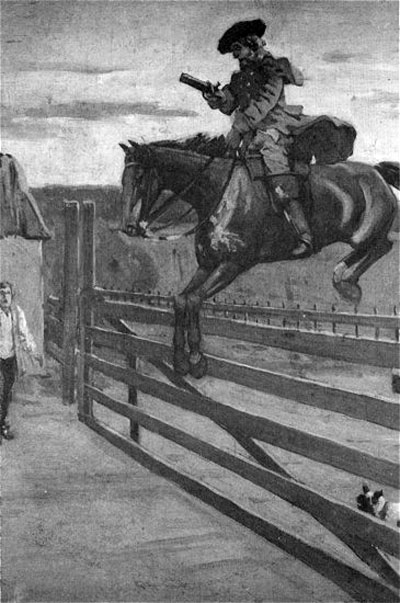
As soon ash he died, the first biography of him came out. In 1739, Richard Bayes wrote a fictionalized biography called “The Genuine History of the Life of Richard Turpin.” He mixed a lot of fact and fiction and the legend began to grow. Another book in 1808 called “The Life and Trial of Richard Turpin, A Notorious Highwayman” took parts of other highwaymen, such as the 200 mile horse ride and the gentlemanly manner, and attributed them to Turpin. Even despite all of this, Turpin might have faded away. That would be if William Harrison Ainsworth’s father hadn’t told him stories of Dick Turpin when he was a child. Ainsworth became so enamored with the stories that in 1834, almost 100 years after Turpin had been executed, he wrote Rookwood, a gothic novel. Dick Turpin appears as a daring, charming highwayman. Turpin was a courageous, likeable rogue. He even used the 200 mile horse ride story. The book was hugely popular and it spawned a large number of penny dreadfuls. These were cheap, illustrated stories that carried on Turpin’s fictitious adventures. One series, called Black Bess; or, The Knight of the Road ram for 254 installments. Turpin was cemented as the highwayman that we know today. And that is what I learned today.
Sources
https://en.wikipedia.org/wiki/Dick_Turpin
https://en.wikipedia.org/wiki/Highwayman
https://theconversation.com/dick-turpin-five-myths-about-the-18th-century-highwayman-debunked-225004
https://www.history.co.uk/articles/the-truth-about-dick-turpin-englands-most-notorious-higwayman
Image By George Cruikshank; the book was written by William Harrison Ainsworth – http://www.gutenberg.org/files/23564/23564-h/23564-h.htm, Public Domain, https://commons.wikimedia.org/w/index.php?curid=8376176