
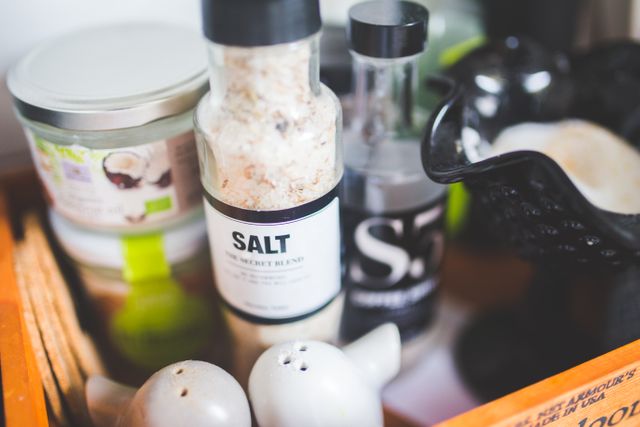
What is a salt tax? A salt tax is a tax that has been levied on salt. It is one of the oldest taxes in the world.
The governments or nobles that control people have always needed money to do it. They need money to build monuments, wage wars, and manage the country. That money has to come from somewhere and most of it comes from taxes. Governments can tax whatever they want, but it makes sense for them to tax things that we cannot do without because then there is no way to avoid the tax. Salt is one of the things we can do without.
Today, you can go into any supermarket and buy a kilogram of salt for less than a dollar. You can pay more for sea salts and specialist salt, but, it is so cheap that restaurants give it away for free. It hasn’t always been that way and salt has, at various times and places in history, been an extremely valuable commodity. The main reasons for this are that we need salt to live, we needed it to preserve food, and it was a scarce resource.
We need salt to live. Our nervous system, muscles, brain, and fluid balance all work and are regulated by salt. One of the biggest problems with dehydration, sweating too much, and diarrhea is that we lose salt. If you lose too much salt, it can be fatal. People used salt to preserve food as well. Today we just throw everything in the freezer. Before freezers, if you had access to ice that was one solution. If you didn’t, then salting was a great way to make food last. If you salt food, it draws out the water and bacteria cannot survive. And salt was very rare. When we say rare, we don’t mean rare on Earth. Salt is abundant, but it is concentrated in certain places. Today, we can make as much salt as we need and ship it across the world. Before modern times, salt was only produced in places that had access to saltwater or natural underground salt.
We know about the Silk Road, but there was also a salt trade. Places that had access to salt mines or saltwater produced the salt and shipped it for trade. Many places grew rich on the salt. You can tell by their name. A lot of towns in the UK that end with “wich” means brine or a salt producing town. Salzburg in Austria means salt castle. As-Salt in Jordan was an ancient salt trading town. Salihorsk in Belarus means salt mountain. Solotvyno in Ukraine means salt town. Yancheng in China means salt city. And there are many other towns around the world that have salt in their name. So, with such an international trade in salt and with salt being so valuable, it made sense for governments to tax it.
The first recorded salt tax goes back to Ancient China in 800 BC. Salt became an important source of government revenue and there are surviving documents that record discussions about the pros and cons of continuing this tax. Salt taxes have been implemented by various countries at various times in history and these salt taxes have been responsible for various wars and insurrections. There were salt wars and salt tax revolts in Italy and France. In 1648 there was an uprising in Moscow against the salt tax. The salt tax was one of the causes of the French Revolution. It was a tax called the Gabelle and it was very unfair. Different regions were taxed at different rates and the wealthy were exempted. It summed up all of the problems with the French monarchy. It was abolished after the French Revolution, although Napoleon brought it back.
And, probably most famously, was the Salt March in India. Britain took over administration of India from the British East India Company in 1858 and they continued the salt taxes that the East India Company had brought in. The problem in India wasn’t just the salt tax but the fact that Britain had a monopoly on tax and it could only be produced in British controlled areas. Gandhi decided to base his civil disobedience movement around the salt tax. His supporters didn’t think the salt tax was a good choice, but they underestimated how much the salt tax affected regular Indians. The march started on 12 March 1930 and by the end millions of Indians took part. He walked about 240 miles (roughly 385 km) from Sabarmati to Dandi on the Arabian Sea, arriving on 5 April. The next morning he broke the law by picking up/making salt from the seashore. That simple act encouraged Indians elsewhere to make or obtain salt in defiance of British law, and the campaign spread enormously. And this is what I learned today.
Sources
https://en.wikipedia.org/wiki/Salt_tax
https://en.wikipedia.org/wiki/Salt_March
https://en.wikipedia.org/wiki/History_of_the_salt_tax_in_British_India
https://mutlucantuz.com.tr/en/why-was-salt-so-valuable-throughout-history
https://science.howstuffworks.com/innovation/edible-innovations/salt5.htm
https://en.wikipedia.org/wiki/History_of_salt
Photo by Karolina Grabowska www.kaboompics.com: https://www.pexels.com/photo/side-view-of-a-bottle-with-salt-6401/