
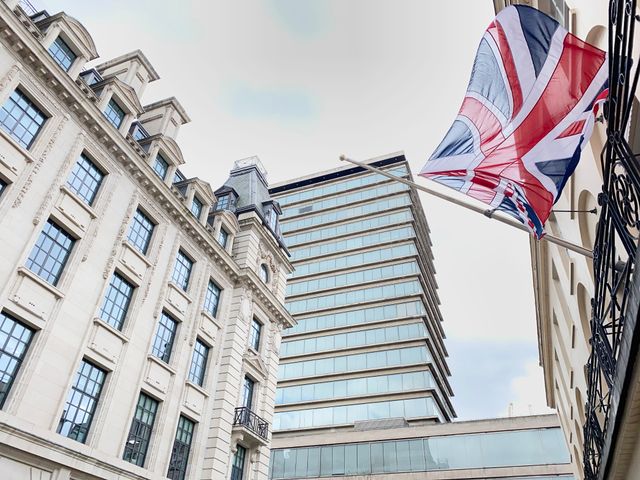
Is an embassy really foreign soil? No. An embassy is not foreign soil. It is still inside the country where it is located, but it is protected by special rules and immunities.
The idea that countries own the land their embassy is on and that it becomes foreign soil is very common, but it is not really true. An embassy can be owned or leased by the country that uses it, but that does not make it part of that country’s territory. The land is still under the sovereignty of the host country. However, the host country cannot treat it like an ordinary building. Embassies are protected by international law.
The most important modern agreement is the Vienna Convention on Diplomatic Relations, which was agreed in 1961. It sets out the basic rules for embassies, diplomats, and diplomatic immunity. Under this convention, the premises of a diplomatic mission are inviolable. That means the host country cannot enter the embassy grounds, search the embassy, or seize its documents without permission. The host country also has a duty to protect the embassy from intrusion, damage, or disturbance.
This is why embassies can seem as though they are foreign territory. The police of the host country cannot simply walk in. The tax authorities cannot raid the building. The government cannot seize the embassy’s files. The host country still has sovereignty over the land, but it has agreed to limit what it can do there so that diplomacy can function.
Diplomatic immunity also extends to many diplomats, though not every person working in an embassy has the same level of protection. Diplomatic agents have strong immunity from the criminal jurisdiction of the host country. This rule exists because it stops a host country from arresting a diplomat and using that person as a political pawn. If diplomats could be arrested every time relations became bad, diplomacy would collapse very quickly.
That does not mean diplomats are allowed to commit crimes freely. They are still expected to obey the laws of the country they are in. However, if a diplomat commits a crime, the host country usually cannot arrest or prosecute that person in the normal way. What it can do is declare the diplomat persona non grata, which means the diplomat is no longer welcome and must leave the country. The host country can also ask the sending country to waive diplomatic immunity so the diplomat can be prosecuted. That can happen, but it is not automatic.
The same idea explains why embassies often appear in spy stories and films. A person who reaches an embassy may be protected from immediate arrest because the host country cannot simply enter the building. However, that does not mean an embassy is a magic door to safety. The host country can refuse to let the person leave. It can surround the building. It can wait. International law does not give every embassy a simple right to shelter refugees or move them safely out of the country. Diplomatic asylum is complicated and is not accepted in the same way everywhere.
During war or a serious breakdown in relations, countries may close their embassies or withdraw their diplomats. Even then, the building and archives still have protection. A country can ask a third country to look after its interests. This is called a protecting power. Neutral countries such as Switzerland have often performed this role. The third country may help protect the embassy building, look after archives, or provide limited assistance to citizens.
Throughout this article, I have used the word embassy, but the wider term is diplomatic mission. A diplomatic mission is the official group of people sent by one country to represent it in another country. An embassy is a diplomatic mission headed by an ambassador. A consulate is different. Consulates usually focus more on helping citizens, issuing visas, supporting trade, and dealing with practical matters.
The idea of sending official representatives to foreign rulers is extremely old. As long as there have been organized states, rulers have needed messengers, negotiators, and envoys. In ancient times, these people could be treated very badly if relations turned sour, so rules gradually developed to protect them. In the ancient Greek world, foreign merchants and communities sometimes had special representatives or protected spaces. The Romans also had rules and customs for envoys. These were not modern embassies, but they were early steps toward the idea that representatives from another state should have some protection.
Permanent embassies developed much later. In medieval and Renaissance Europe, trading powers such as Venice began keeping representatives in important cities and courts. At first, envoys might be sent for one particular job, such as arranging a marriage, negotiating a treaty, or settling a trade dispute. Over time, it became useful to have someone stay permanently in another country. That way, both sides always had someone they could contact. This gradually developed into the modern embassy system.
These days, most countries maintain embassies in many other countries, although not every country has an embassy everywhere. Smaller countries may not be able to afford a large network. Some countries cover several countries from one embassy in a nearby capital. Some countries do not have embassies because they do not have formal diplomatic relations. For example, the United States does not have formal diplomatic relations with Bhutan, Iran, or North Korea. The U.S. Embassy in Syria is also closed, although that situation is slightly different because operations were suspended.
There are also a few unusual cases. Vatican City and Liechtenstein are so small that foreign embassies accredited to them are normally located outside their territory. Embassies to the Holy See are usually in Rome rather than inside Vatican City, and many embassies accredited to Liechtenstein are based in nearby countries such as Switzerland, Austria, or Germany.
So, an embassy is not foreign soil. It is not a little island of another country. It is a protected diplomatic space inside the host country. The host country still has sovereignty, but it has agreed not to enter, search, or interfere with the embassy so that diplomacy can continue even when countries disagree. And this is what I learned today.
Sources
https://history.state.gov/departmenthistory/short-history/diplomatictradition
https://www.sanfranciscopolice.org/your-sfpd/policies/general-orders/5-13
https://en.wikipedia.org/wiki/Diplomatic_immunity
https://en.wikipedia.org/wiki/Diplomatic_mission
Photo by Jean-Paul Wright: https://www.pexels.com/photo/white-concrete-building-with-flag-7557294/