
Why do some animals live in groups and others don’t? Prey animals that live in groups tend to do so for safety. Predators that live in groups tend to do so because it makes them better hunters. Some animals might also live in groups to keep warm, or because it makes it easier to find food. Living in groups also makes it possible to divide up labor. Animals live in groups when the benefits of cooperation are greater than the costs of competition.
Let’s start with predators. Predators that live in packs tend to do so because it makes hunting easier. Wolves and lions are good examples of pack hunters. There are several reasons why animals might evolve to hunt in packs. Firstly, they can bring down much larger animals than they could on their own. If you have ever watched lions hunt on youtube, they all attack at the same time. A large animal, such as a zebra, might be able to fend off one lion, but it can’t fend off five. The second reason is that pack animals can work together to herd an animal or separate one animal away from its group. They can take it in turns chasing animals so the animal tires faster. A third reason is that they can protect their catch. Animals like hyenas are always looking to steal another animal’s catch. They will think twice if the catch is protected by a number of animals. The pack hunters have to share their catch, which means reduced calories per animal, but they can catch more animals, which means more calories in the long run. There is also an advantage in the energy expenditure. A solitary hunter might spend more calories to take down prey than the individual animals in a pack would.
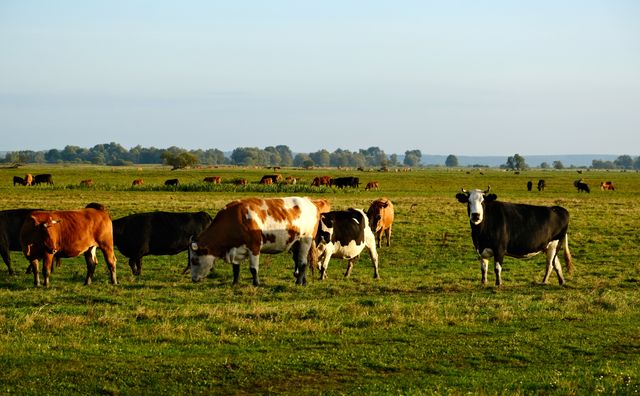
Prey animals, on the other hand, live in groups for reasons of protection. There is a lot of reason in the saying, “safety in numbers.” If an animal is living in a herd of 200, it has potentially a 1 in 200 chance of being the prey. Those are better odds than if it lived on its own. A lot of animals living in a herd can also keep more of a lookout for danger. There are hundreds of eyes and ears always on the lookout for danger. It is also more difficult for predators to attack a large group and they usually need to separate the animals somehow. And the large number of animals blend together visually and make it difficult for the predator to see and track individual animals.
There are other advantages in living in a group as well. It is easier to keep heat in. Some penguins live in a group and when the weather is particularly bad, they shelter in a huddle, taking it in turns to be on the outside and in the middle. If they lived on their own, they would probably freeze. Animals in a group can also divide up labor. Some animals can hunt, some rear the young, and some build the nest. Ants are a good example of this. It is also easier for group animals to teach the young because there is a combination of experience in the elder animals that you won’t get with solitary animals. And group animals sometimes find it easier to locate food. Ants use this method. Ants go out in all directions and if one ant finds food, they lay down a trail of pheromones and the other ants follow that to get the food. If they were solitary, their chances of finding food would drop drastically.
So, if there are so many advantages to living in groups, why do some animals live on their own? There are a lot of advantages to living in a group, but there are also a lot of disadvantages. There is a huge amount of competition for resources. Animals in groups have to find a lot more food to survive than a solitary animal does. Solitary animals, such as polar bears, have less competition for their resources. It is also much easier for solitary animals to hide, both predators and prey. One polar bear is hard to see, a hundred wouldn’t be so hard. There are diseases that solitary animals can avoid as well. Viruses spread very quickly from animal to animal in a group. Think about the colds that affect us every year. A person living on their own would probably almost never catch colds. And there are a lot of stresses related to living in groups, such as social hierarchies that solitary animals don’t have to deal with.
Some animals are not purely social or purely solitary. Octopuses, for example, are usually thought of as solitary animals, but some species have been found living close together when conditions are right. This shows that social behavior is not always a simple yes-or-no choice. Animals live alone or in groups depending on what helps them survive and reproduce in their particular environment. And this is what I learned today.
Sources
https://en.wikipedia.org/wiki/Pack_animal
https://www.bbc.com/future/article/20250213-the-overlooked-advantages-of-being-a-solitary-animal
https://en.wikipedia.org/wiki/Pack_hunter
Photo by Roman Biernacki: https://www.pexels.com/photo/cows-grazing-in-open-field-during-daytime-34096012/