
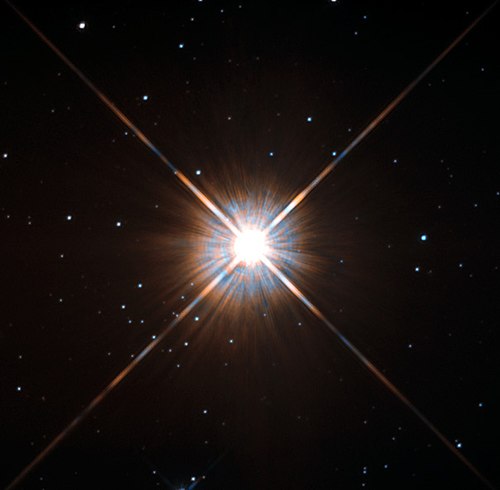
What are the differences between a brown, red, orange, yellow, blue, white, and black dwarf?
The main difference between them is their state of stage of life. Red, orange, and yellow dwarf stars are living stars. Brown dwarfs are failed stars. White and black dwarfs are dead stars. Blue and black dwarfs are theoretical because the Universe is not yet old enough for any to exist.
We might think that a dwarf star is very small, but they are not as small as you think. Our sun is actually a dwarf star. Most stars are classified as dwarf stars or giant stars, although astronomers also recognize supergiants. There is no real point where dwarf stars become giant stars, just as there is no specific point where a child becomes an adult. Dwarf and giant surprisingly don’t refer to the size of the star as much as the star’s stage of life. Our sun is actually a yellow dwarf star.
This classification was created by a Danish astronomer called Ejnar Hertzsprung in 1906. He noticed that the reddest stars could be classified into two groups. Stars that were much brighter than the sun he called giants and stars that were not as bright he called dwarfs. There are 7 types of dwarf star.
Brown dwarfs are the smallest and they are failed stars. Brown dwarfs have between 13 and 80 times the mass of Jupiter. They are objects larger than planets that did not become large enough to fuse hydrogen and become a main sequence star. A star needs a certain amount of mass to produce the pressure needed to start hydrogen fusion at its core. A brown dwarf has enough gravity to fuse deuterium in its core and emit some light, but that’s it. That means they are cool and they look brown or even purple. They cool down over time.
Red, orange and yellow dwarfs are actually stars. Red dwarfs are the smallest type of main sequence stars. They are much smaller than our sun and nowhere near as bright. They are between 8 and 60% the size of our sun and the coolest stars in the universe. They are cool because they are not producing much energy, which means it will take them hundreds of billions or trillions of years to burn through all of their fuel. They are the most common kind of star but they are not easy to find because they are not bright.
Orange dwarfs have 50 to 90% the mass of the sun and they are proportionately cool. They will burn through their fuel much faster than a red dwarf, but they will still be here for 20 to 70 billion years, much longer than our sun.
Yellow dwarfs are between 90 and 110% the mass of our sun, making our sun a yellow dwarf. They are called yellow dwarfs, but they can be white, as our sun is when not viewed through our atmosphere. They last approximately ten billion years. Most yellow dwarfs can become red giants when they have burned through all their fuel. When the hydrogen in the core runs out, the energy from the core drops and gravity wins, making the core contract. As it contracts pressure builds up and it gets hotter. The core continues to contract and a shell of hydrogen forms around the core. The extra energy from the core starts the hydrogen in the shell fusing, and that produces more energy too. All the energy inflates the star and pushes the outer layers out. The star becomes much bigger than it was and much brighter, but its outer layer is cooler. This will happen to our sun in about 5 billion years. It will become a red giant, about 100 times bigger than it is now. Its outer shell will swallow Mercury and Venus, and possibly Earth as well.
White, blue, and black dwarfs are all dead stars. A white dwarf forms when a yellow or orange dwarf main sequence star, like our sun, that has become a red giant, collapses back to become smaller and denser. Stars that are not massive enough to become neutron stars end their lives as white dwarfs. They are very hot but gradually lose their heat and crystalize. They are theorized to last for 10,000,000,000,000,000,000,000,000,000,000,000,000,000 years.
A blue dwarf forms after a red dwarf has used all of its hydrogen. Because it could take a red star a trillion years to reach this point and the universe is only 13.79 billion years old, there aren’t any out there yet. It isn’t a dead star because it will still be producing energy by hydrogen fusion. They are theoretical because there is no way the human race will ever see one.
A black dwarf is a dwarf that would form when a white dwarf cooled down. They become so cool that they are black. There are also none of these yet because they take longer to form than the universe has been around.
The largest stars don’t become any kind of dwarf. If a star has enough mass, it will collapse and explode as a supernovae, then becoming a neutron star or a black hole. And this is what I learned today.
Sources
https://science.nasa.gov/universe/stars/types
https://en.wikipedia.org/wiki/Dwarf_star
https://en.wikipedia.org/wiki/Red_dwarf
https://en.wikipedia.org/wiki/G-type_main-sequence_star
https://en.wikipedia.org/wiki/K-type_main-sequence_star
https://en.wikipedia.org/wiki/Blue_dwarf_(red-dwarf_stage)
https://en.wikipedia.org/wiki/White_dwarf
https://en.wikipedia.org/wiki/Black_dwarf
https://en.wikipedia.org/wiki/Brown_dwarf
https://en.wikipedia.org/wiki/Ejnar_Hertzsprung
https://science.nasa.gov/exoplanets/resources/life-and-death/chapter-6
By ESA/Hubble, CC BY 4.0, https://commons.wikimedia.org/w/index.php?curid=29263039