
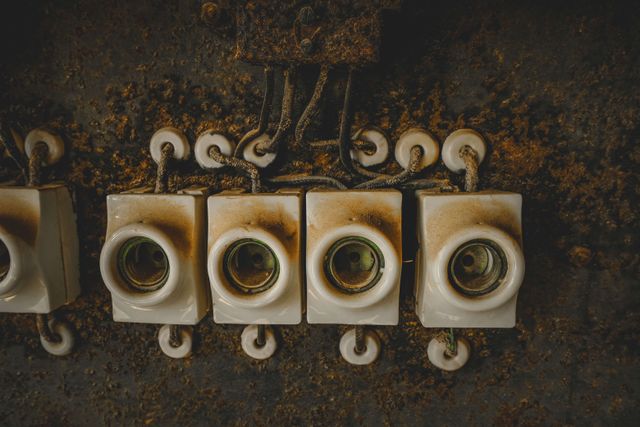
Why did the first electrical plugs go into light sockets? The first electrical plugs screwed into light sockets because early homes were wired mainly for lighting, and the light socket was often the only convenient place to tap the electricity.
These days, every house will have multiple electrical outlets in most rooms. We will be able to plug in any appliance we have, and if we don’t have enough outlets, we can get multiple plugs, or extension cables. This wasn’t the way when houses were first wired for electricity. We have electricity to power the appliances in our houses, but in the early days of electricity being wired into houses, it was more the case that appliances were invented to make use of the new supply of electricity.
The very first house to have electric lighting was called Cragside. It is a stately home in Northumberland, England. Its owner, William Armstrong, was an inventor and he made a dam to produce hydroelectric power in his garden. This was one of the first hydroelectric power plants in the world, and he used the power generated to power the first indoor electric lights in the world, in 1878. This was a one off because he produced his own power for his own lights.
In 1882, two power stations, both owned by Thomas Edison, started producing electricity for street lighting and some house lighting. These were the Holborn Viaduct power station in London and the Pearl Street Station in New York City. The London station closed down after a few years, but the New York station went on to become the standard way electricity was produced and distributed to houses for lighting. Thomas Edison had invented the incandescent lightbulb and the few houses that were wired for electricity could suddenly have lighting at the flick of a switch. They no longer needed to use dangerous and smelly gas lamps. In the first year, the Pearl Street Station supplied electricity to 82 homes. By 1884, it had 508 customers. Several other power stations appeared by the end of 1882 and the number of homes receiving electricity steadily grew. In the beginning, electricity was a luxury. By 1900, roughly 3% of US homes had electricity. That grew to about 10% by 1908, almost 50% by 1920, nearly 85% by the end of World War 2, and virtually 100% by 1960.
In the beginning, Edison’s goal for wiring houses with electricity was to sell more of the light bulb he had invented. He wanted to compete with the gas companies. Then, over time, he moved to selling light and electricity by extension, as a utility. He canvassed an area before building an electric network to see how much demand there would be. He looked at it as basically selling light, and that’s what his customers felt they were buying. The electricity entered the house from the network and the only places it could be accessed in the house were where the lightbulbs were screwed in. Early electrical service was marketed as ‘lighting,’ so homes were wired with lamp holders—not general-purpose outlets.
As with most other major society changing inventions, countless other inventions appear that work off the back of the first invention. Inventors very quickly realized that other things could use this supply of electricity coming into the houses as well as the light bulbs. Very soon after houses were wired for lighting, an electric iron and an electric fan that plugged into the light socket were invented. They were both fairly simple devices. Then, a few years later, an electric toaster was invented.
More labor-saving devices began to appear, but there was no standardized plug to connect them to the light sockets, and having to connect them to the lights meant it was more difficult to use them. From the early 20th century, standardized plugs began to appear, but it was still not ideal. People wanted separate outlets for appliances, but installing the extra wiring was prohibitively expensive. As with most things, supply followed demand. These new labor-saving devices were incredibly popular and more and more appeared on the market. Often, people would want to plug in more than one at once. It became impractical to only plug them into light sockets and houses were slowly rewired to have wall outlets. In the early days, electrical wiring and labor-saving devices were so expensive that they were only owned by the very wealthy, but, over time, the prices slowly began to come down.
This shift—lighting first, appliances second—was part of the broader wave of electrification that transformed daily life, and it was part of what has been called the Second Industrial Revolution. Electricity, the automobile, and many other inventions it changed society significantly. And this is what I learned today.
Sources
https://mrelectric.com/blog/the-history-of-electricity-history-of-electricity-timeline
https://www.twinkl.jp/teaching-wiki/the-history-of-electricity
https://en.wikipedia.org/wiki/Cragside
https://www.parkerandsons.com/blog/when-did-homes-first-get-electricity-a-historical-insight
https://blog.wilcox-electric.com/wilcox-electric/a-brief-history-of-household-electricity
https://en.wikipedia.org/wiki/History_of_AC_power_plugs_and_sockets
https://www.drax.com/electrification/the-ideas-and-tricks-inside-great-britains-plugs
https://www.nyhistory.org/blogs/edison-lit-manhattan
https://ethw.org/Early_Applications_of_Electric_Power
https://penntoday.upenn.edu/news/how-appliance-boom-moved-more-women-workforce
Photo by Francesco Ungaro: https://www.pexels.com/photo/a-close-up-of-four-electrical-sockets-on-a-wall-27862195/