
Why do scientists disagree about how siphons work? Scientists understand exactly how siphons behave, but there is an ongoing debate over which physical principle deserves most of the credit. It could be atmospheric pressure, it could be the cohesion between water molecules,or it could be a combination of the two.
A siphon is a device that lets someone transfer water from one full container to anothemolecules, orut a pump. A siphon is a pipe that forms an inverted U. The magic of a siphon is that the water flows uphill before it flows down the other side of the pipe and into the second container. The only rule is that the second container and the end of the pipe must be lower than the first container and the start of the pipe. Siphons can be short, such as the one used when siphoning gasoline out of a car fuel tank, or they can be long, such as several kilometers long series of siphons that move water from Marlette Lake to Virginia City in the deserts of Nevada.
The word siphon (also spelled syphon) comes from the Greek word for a pipe or a tube. It wasn’t invented by the Greeks, but Hero of Alexandria wrote a lot about siphons and his word for them stuck. The Romans took the word into Latin as sipho. It went from there into French as sifon or siphon, and from there into English.
So, what are the theories on how siphons work? The first one is the theory that is taught in textbooks, and it is that atmospheric pressure pushes the water up the pipe. The atmosphere is obviously pushing down on the surface of the water in the full container, as it is pressing down on everything. When you start the siphon, you suck water along the pipe until it comes out the other end. When you do this, water is pulled into the tube, lowering the pressure inside it. Because the pressure inside the tube is now lower than the atmospheric pressure acting on the surface of the water in the container, the atmosphere pushes more water into the tube. At the other end of the pipe, gravity pulls the water out. As gravity pulls water down the long side of the tube, the pressure inside the tube remains lower than atmospheric pressure, allowing more water to be pushed in. and this continues until the bucket is empty. Because of this, the maximum height of a siphon is 10.3 m. This is how high the atmosphere can push a column of water. At this height, the weight of the column of water balances the force exerted by atmospheric pressure.
However, not everybody thinks that this is the reason why a siphon works. The second theory is that gravity pulls water out of the end of the siphon and the rest of the water follows it because of something called cohesion. Water molecules stick together because of hydrogen bonding. Hydrogen bonding is an attractive force between neighboring water molecules. The slightly positive hydrogen atom in one water molecule is attracted to the slightly negative oxygen atom in another. This bond is so strong that water sticks together more strongly than a lot of other liquids. It is also why water has such a high boiling point. It requires a lot of energy to break the hydrogen bond. It is also why water has such strong surface tension and why ice can float. In a siphon, when you suck the water out of the tube for the first time, gravity takes over and pulls the water down out of the end of the siphon into the second container. Because all of the molecules are connected by hydrogen bonds, the first set of water molecules going through the siphon pulls those behind it and it continues, like an anchor chain being pulled off a ship.
There is debate about which of these two methods is primarily responsible for siphoning because experiments showed that a siphon will work even in a near vacuum. That removes the element of atmospheric pressure. However, the argument against that is it was not a proper vacuum, and just because atmospheric pressure isn’t the culprit in a vacuum doesn’t mean it isn’t under normal circumstances.
The answer may turn out to be that all three effects play a part. Gravity provides the energy that keeps the water moving, hydrogen bonds allow the pull to be transmitted through the water column, and atmospheric pressure helps keep the column intact under normal conditions. The debate is really about which deserves the most credit. And this is what I learned today.
Sources
https://en.wikipedia.org/wiki/Siphon
https://nbmg.unr.edu/scienceeducation/ScienceOfTheComstock/Physics-Siphons.html
https://www.physicslens.com/how-does-siphoning-work
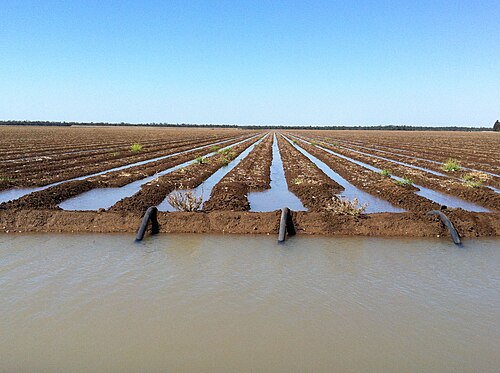
Image By Hullwarren – Own work, CC BY-SA 3.0, https://commons.wikimedia.org/w/index.php?curid=22665370