
How did sailors get fresh drinking water? Sailors got fresh drinking water from the barrels stored on the ship, rainwater, stocking up whenever they made land, and occasionally desalination.
These days, most of us rarely use a boat. If we do, it might be a short ferry crossing, or possibly a cruise. We don’t give any thought to where the water we drink comes from. We turn the tap, and there it is. We are far more likely to travel by plane, which carries about 1,000 liters of stored water, plus bottled water for the passengers. The longest single flight you can take on Earth is about 24 hours. Back in the days of sailing, ships could be at sea for several months at a time. The limiting factor to how long a ship could stay at sea was food and water.
An average person needs about 3 liters of water a day, conservatively. That’s for drinking, cooking, and other things. Most people, especially sailors working hard on the deck of a ship out in the sun, need more than that. A small sailing ship might have had a crew of 120, but some of the larger ships could have a crew of up to 850 sailors and officers. If everybody needs three liters of water a day and you have 850 sailors, that’s 2,550 liters of water a day. That’s 2.55 tons of water a day. If the ship is planning to be at sea for two or three months, that is a significant weight of water. And that is not even factoring in the weight of the barrels that hold the water. The water barrels were huge. Some of them could hold as much as 500 liters of water.
Before ships set sail, they stock up with food, barrels of water, alcohol, oil, and all of the other things the ship will need. Everything is stored down in the bottom of the ship to keep its center of gravity low and to help it balance. As food and water were consumed, the crew had to manage the remaining stores and ballast so that the ship remained properly balanced.
The main problem with the stores was how long they would last. Food could easily go rotten, and there are stories of sailors who spent so long at sea that they had to eat biscuits with worms in them. Water was another problem. The barrels were not sterile and they could contain microorganisms when they were filled. They might also have bits of organic material in them too, depending on what had been stored in the barrels before. Those microorganisms and organic matter could make the water taste foul during the voyage. Some sailors described the water as becoming cloudy, smelly, and unpleasant, with a visible growth and sediment in it. Boiling the water would help, but that takes fuel.
So, what did the sailors do? They often had no choice but to drink the bad tasting water. They would also carry beer and rum, but that would not be a replacement for the water. If they were far at sea, they didn’t have a lot of choice. They could try to refill some of the barrels when it rained, but they often had to wait to make land so that they could resupply. Captain Cook was actually at sea for 117 days before he sighted land. They were getting towards the end of their stored supplies by that point., but they did have a new device to desalinate seawater.
A lot of islands set themselves up as refilling stations and made quite a lot of money from the ships that came past. But that only worked if the ships could get there. Another alternative was to distill seawater and remove the salt. The problem with that is you have to boil the water, which uses up fuel. The ship was limited in how much fuel it could carry as well. So, for most ships, if they were at sea for a long time, they had a water supply, but it certainly wasn’t fresh.
The invention of the steam engine and steam ships solved that problem. Steamships made the problem much easier. Because they already had boilers and large sources of heat, they could use evaporators to distill seawater and produce fresh water aboard the ship. As the technology improved, ships became less dependent on carrying enormous quantities of drinking water or regularly stopping to refill their barrels. And this is what I learned today.
Sources
https://shipsofscale.com/sosforums/threads/water-barrels.15082
https://piratesurgeon.com/pages/surgeon_pages/water2.html
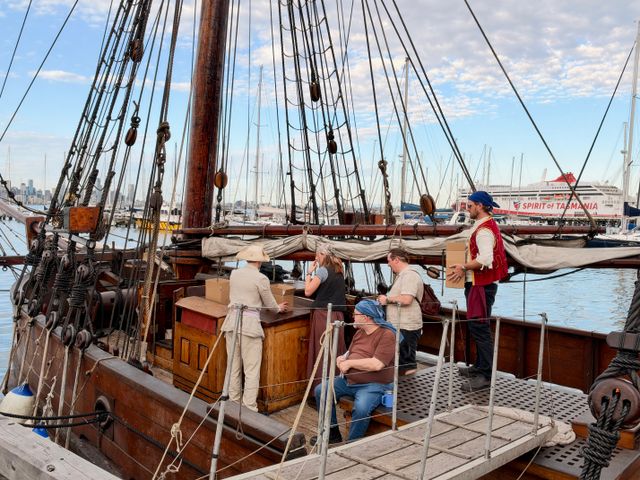
Photo by Joolsmagools ®️: https://www.pexels.com/photo/historic-tall-ship-in-williamstown-harbor-australia-39598157/