
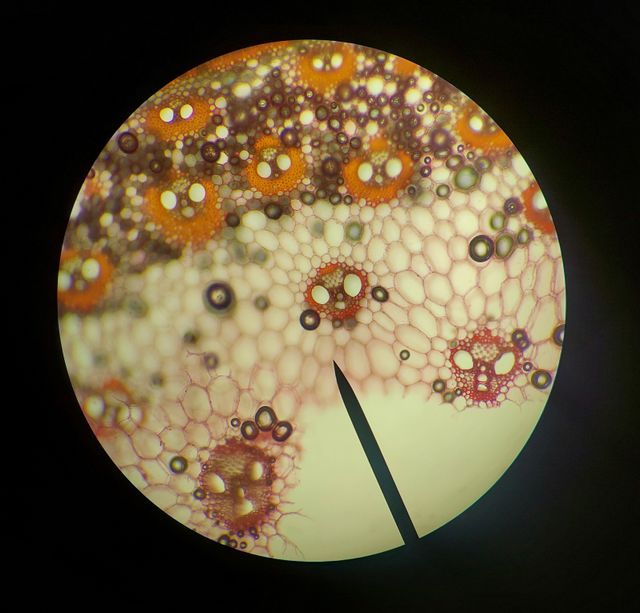
How did we discover stem cells? Stem cell were discovered by accident in the 1960s by James Till ad Ernest McCulloch. Despite the enormity of the discovery, they never won a Nobel Prize for it.
Most cells in our bodies have a specific job. Skin cells, nerve cells, and liver cells all perform different functions. Stem cells are unusual because they can make copies of themselves and develop into other types of cells. Some stem cells can become almost any type of cell in the body, while others can only produce certain types. For example, stem cells in our bone marrow continually produce new blood cells. They are unique. When we begin to develop in the womb, we have a lot of stem cells. Once we reach adulthood, the majority of our cells have settled down and we only have a few places in our bodies that produce stem cells. A lot of research is going in to creating stem cells because if we can create them, we can potentially fix a lot of injuries and illnesses that plague us. For example, they could potentially repair damaged nerve tissue in paralyzed people and, although not fix them, restore some movement and feeling. Finding a way to make stem cells is the holy grail.
So, how were stem cells discovered? Well, first we need to look at the discovery of cells. Robert Hooke was the first person to name cells. He used a compound microscope that had been invented in 1590 and in 1665 he looked at slices of cork. He saw that it was made up of lots of tiny compartments that reminded him of monks’ rooms, so he called them “cells”. Ten years later, Antonie van Leeuwenhoek was able to see microscopic living organisms in water. He called them animalcules. He was able to see them because of further developments in the microscope. In 1831, Robert Brown identified the nucleus in plant cells, and then in 1838, Matthias Schleiden put forward the idea that plants were made mainly of cells. In 1839, Thedor Schwann showed that animals were also made of cells and in 1852 Robert Remak was able to show how cells divide and reproduce. It was only with the invention of the electron microscope in 1931 that it became possible to see the fine cellular structures. It was known that new cells came from existing cells but no one knew that there was a type of cell that can develop into all cells.
The term “stem cell” was introduced in 1868. A German biologist called Ernst Haeckel used the term to refer to an ancestral cell in evolutionary history. The cell that all cells come from. He then used the term to apply to a fertilized egg. Then, in the 1890s, scientists put forward the idea that some cells could give rise to reproductive cells. It was only an idea. In 1908, Alexander Maximow and several other scientists developed the idea that blood cells come from a single type of cell. This led to the idea that problems with blood cell production in people could be cured with a bone marrow transplant. The Bone marrow contained the blood stem cells, which grew new blood cells, but nobody knew why.
In 1960, two scientists working in Canada, James Till and Ernest McCulloch, were studying how radiation affected bone marrow. They wanted to know if a bone marrow transplant could offset the problems caused by radiation. They exposed mice to lethal doses of radiation and then injected each mouse with a different number of bone marrow cells to observe what happened. One day, James Till and Ernest McCulloch were examining the spleens of the mice when they noticed small lumps. The number of lumps was directly proportional to the number of bone marrow cells that had been injected. The lumps were colonies containing millions of newly produced blood cells. The injected bone marrow cells traveled through the mice’s bloodstreams, and some settled in their spleens. The spleen can produce blood cells under certain conditions, so these cells began to multiply. Within ten days, they had produced small lumps containing millions of cells. The scientists noticed that the more bone marrow cells they injected, the more lumps appeared. This suggested that each lump had grown from a single special cell. Further experiments showed that these cells could produce different types of blood cells and make copies of themselves. The scientists had found experimental evidence of stem cells.
They published their discovery in 1961, but they hadn’t yet proved what they had discovered. That would take them another two years. In 1963, with other colleagues, they were able to show that these cells could produce other cells. They were stem cells.
The discovery of stem cells opened up an entirely new field of research. In 1981, scientists managed to isolate and grow embryonic stem cells from mice. Then, in 1998, James Thomson and his colleagues successfully grew human embryonic stem cells in a laboratory. These cells could develop into almost any type of cell in the body. However, perhaps the most remarkable discovery came in 2006, when Japanese scientist Shinya Yamanaka found a way to turn ordinary mouse cells back into stem-cell-like cells. A year later, scientists achieved the same thing with human cells. Suddenly, researchers had a way to produce versatile stem cells without obtaining them from embryos. Yamanaka received the Nobel Prize in Physiology or Medicine in 2012, alongside John Gurdon, for discoveries about reprogramming mature cells. However, Till and McCulloch, whose experiments had helped establish the existence of stem cells, never received a Nobel Prize. And this is what I learned today.
Sources
https://www.mayoclinic.org/tests-procedures/bone-marrow-transplant/in-depth/stem-cells/art-20048117
https://en.wikipedia.org/wiki/Stem_cell
https://bioinformant.com/who-discovered-stem-cells
https://news.usask.ca/articles/research/2018/the-accidental-discovery-of-stem-cells.php
Photo by Lidija Ostojić: https://www.pexels.com/photo/organism-under-miscroscope-16598692/