
Were the Dark Ages really dark? The Dark Ages were not dark in the way that we think.
The Middle Ages lasted from roughly the 5th century to the 15th century. For centuries, much of this period was described as the Dark Ages, although modern historians generally avoid the term or restrict it to the early Middle Ages. It was said to start when the Roman Empire fell and withdrew from Europe. It lasted until the 15th century Renaissance. The general idea is that there were no advances in science, technology, art, and many other fields. However, it was not like that.
The Dark Ages were first named by an Italian scholar called Petrarch in the 1330s. He didn’t actually use the words “Dark Ages”, but he did come up with the concept. He was fascinated by classical Greece and Rome. He viewed the whole history of Greece and Rome through rose tinted glasses and believed that they were the best of culture and innovation. When they fell, by definition, the world became worse. He worked to bring them back and restore Latin as a working language. He rediscovered the letters of Cicero, which is often credited with kickstarting the Renaissance. He divided the periods of history into the classical period of the Greeks and Romans, and the time of darkness, up to when he was writing. It is easy to see why he believed the classical time was so much better. He was living through a time of poverty, warfare, and the plague that decimated Europe, killing roughly half of all people.
However, one thing we should probably point out is that when Petrarch first talked about a dark ages, he was referring to the stagnation of Latin literacy culture. That was generally it. He wasn’t implying that culture was stagnating or that it was a time of low education and no advances. And, in a way, it was a dark ages because there was not much written about it. Compared to later periods, it was poorly documented.
The period that became known as the Dark Ages began when the Roman Empire declined. The decline didn’t suddenly happen, but had been progressing slowly over a hundred years. In 376, large numbers of Goths crossed the Danube into Roman territory for the first time. They defeated a Roman army and killed the Emperor Valens. Between 406-7, more Germanic tribes invaded Western Europe. By 410, Roman authority in Britain had collapsed and Visigoths sacked Rome. By 440, Roman North Africa had been conquered by Vandals and by the 470s, most of Gaul and Spain were out of Roman control. In 476, the last Roman emperor was deposed and in 493, Italy was controlled by the Ostrogoths. The Romans had been known for their control, innovation, art, and were considered, certainly by Petrarch, as light. What followed was dark. A period of stagnation. But, was it really?
Well, in some ways it was. Roman inventions, such as concrete, mostly disappeared and were not seen again for hundreds of years. And education declined, bringing literacy rates down. The church took over a lot of control and sometimes cracked down on art, freedom of expression, and scientific discovery. There was a lot of cultural shock as countries found their feet after Rome left. There were several plagues and a huge amount of migration.
However, there was a lot of innovation as well and things were not so dark. Many religious institutes, especially a lot of the monks, encouraged education, literacy, art, and research. Agriculture boomed as well. The heavy plow was invented, and the introduction of the horse collar from China revolutionized agriculture. The horse collar transformed trade as well because horses could pull goods much further than oxen could. There was also a period of warm weather that lasted 400 years and drastically boosted growing capabilities. There were also great advances in science. People were working on things such as theories of gravity and there were enormous advances in mathematics and science from the Islamic World. There were many technological advances as well. Many of them were based around agriculture, but that was the center of people’s worlds and it made sense. The horse collar and plow we have talked about. Tidal-powered mills were invented and watermills were improved. All of these innovations were the start of the revolution in agriculture that would come. And without these, the Industrial Revolution may possibly never have happened. And this is what I learned today.
Sources
https://www.history.com/articles/6-reasons-the-dark-ages-werent-so-dark
https://en.wikipedia.org/wiki/Dark_Ages_(historiography)
https://www.oerproject.com/OER-Materials/OER-Media/HTML-Articles/Origins/Unit5/The-Dark-Ages-Debate
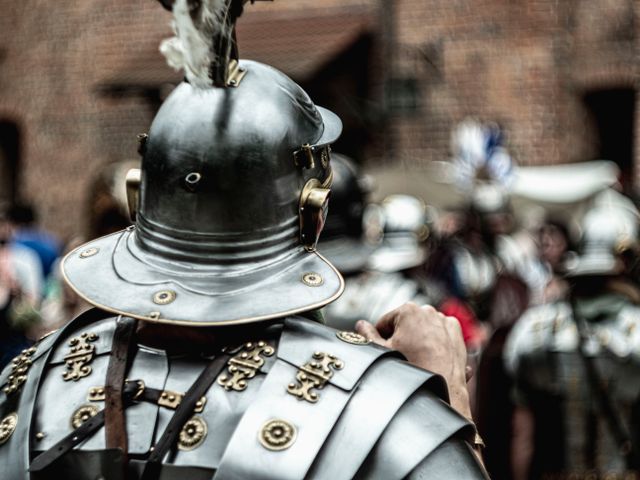
Photo by SHOX ART: https://www.pexels.com/photo/medieval-knight-in-armor-at-historical-reenactment-38125780/