
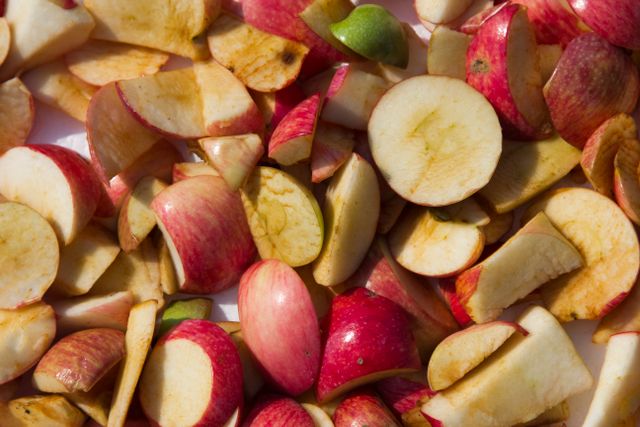
Why do cut apples turn brown, but other fruits don’t? Cut apples turn brown because of an enzyme in their cells called polyphenol oxidase. However, apples are not the only fruits that go brown by a long way. There are many other fruits that also turn brown.
Apples go brown when they are cut, and polyphenols come into contact with the enzyme polyphenol oxidase. If the apple is not damaged, both of those chemicals are kept in different compartments in the apple’s cells so they can’t come into contact. The polyphenol oxidase is kept inside structures called plastids, while the polyphenols are stored in compartments called vacuoles. That is why the apple can stay white for weeks while it is growing and then almost instantly turn brown when it is cut.
Both chemicals have a purpose inside the apple. Polyphenols are a large group of chemical compounds produced by many different plants. There are several kinds in an apple. They have many functions. They help the plant defend against insects and pathogens. They can taste bitter when eaten or interfere with the organisms that infect or feed on the plant. They can absorb harmful UV radiation, which protects the plant. They can protect plant cells from oxidative stress. And they help produce the color and taste of the apples and their skins.
The polyphenol oxidase is an enzyme that contains copper and uses oxygen to convert some of the polyphenols into very reactive chemicals called quinones. Quinones can react with proteins and other molecules in the cells to make plant tissue less nutritious or indigestible to insects and stop pathogens from reproducing inside the plant.
So long as the two chemicals remain in their separate compartment in the apple cells, the apple flesh stays white. When you cut an apple, you break the cells open, and the polyphenols and the polyphenol oxidase can come into contact. When polyphenol oxidase comes into contact with polyphenols and oxygen, it converts the polyphenols into reactive compounds called quinones. These quinones undergo further reactions, forming larger brown pigments called melanins. These are similar in some ways to the pigments that give our hair and skin their color, and it is the pigment that makes apples go brown.
You can prevent apples from going brown in several ways. One way is to put lemon juice, or some other type of acid on them. The acid lowers the pH of the apple, which makes it more difficult for the chemical reaction to happen. The apples will still go brown, but it will take longer. Or you can soak the apple slices in water because the water keeps oxygen away, which is necessary for the reaction. You can also stop them from browning by applying heat. A little bit of heat deactivates the polyphenol oxidase completely, which is why the apples in apple pies are never brown.
Apples are not the only fruits that go brown. Any fruit that contains polyphenols and the same enzyme will turn brown when they are cut. This includes pears, bananas, avocados, apricots, grapes, guavas, and vegetables, such as potatoes, lettuce, and mushrooms.
Fruits that don’t turn brown usually have a high acid content or a high water content. These are citrus fruits like lemons, oranges, or limes, and fruits like melons and berries. The acid stops the chemical reaction from working, and the water keeps the oxygen away from the chemicals.
These days, breeders have produced apples that have a much lower enzyme content, and they don’t go brown when they are cut. They are called Arctic apples, and scientists made them by silencing the gene that produces polyphenol oxidase. When the apples are cut, they don’t have the enzyme, so they stay white. However, some people have questioned whether reducing the amount of polyphenol oxidase might have unintended effects. The enzyme may help defend plants against insects and pathogens, so could reducing it make the apple trees more vulnerable? Regulatory authorities have examined this possibility and have not found evidence that Arctic apples pose an increased plant-pest risk. Food safety assessments have also concluded that they are as safe to eat as conventional apples. The apples don’t turn brown as readily, but whether suppressing the enzyme has other subtle effects remains a subject for scientific investigation. And that is what I learned today.
Sources
https://abcnews.com/Health/apple-turn-brown/story?id=28955985
https://www.sciencefocus.com/nature/why-do-apples-turn-brown-so-fast
https://www.britannica.com/story/why-do-sliced-apples-turn-brown
Photo by Valentin Ivantsov: https://www.pexels.com/photo/close-up-of-fresh-apple-slices-on-a-surface-34566752/