
Are all birds waterproof? No, not all birds are waterproof in the same way. Some birds are extremely waterproof, some are only water resistant, and some have feathers that are partly wettable because that helps them dive.
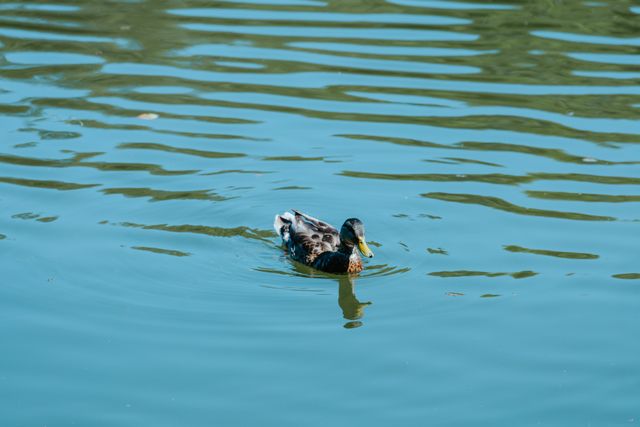
Birds that live on water usually need very good waterproofing. Ducks are a good example. Ducks can fly to escape predators or to migrate, but they spend a lot of their time sitting on water or paddling around. If their feathers became soaked every time they landed on a pond, they would lose heat very quickly and become too heavy to fly properly. They have two main ways of keeping water away from their skin.
The first is an oil they produce called preen oil. It is produced by the uropygial gland, which is near the base of the tail. Ducks use their beaks to spread this oil over their feathers, which is why the action is called preening. The oil helps condition the feathers and makes water roll off them more easily. The second method is the structure of the feathers themselves. Ducks have a warm inner layer of down and an outer layer of contour feathers. These outer feathers overlap like roof tiles, and each feather has tiny barbs and barbules that hook together. When they are properly lined up, they make a smooth waterproof shell around the bird.
This feather structure is probably more important than the oil by itself. If the hooks and barbs are not aligned, water can get through. That is why birds spend so much time preening. They are not just spreading oil. They are also combing the feathers back into place. When everything is lined up properly, water beads up and rolls off. There is a reason we say “water off a duck’s back.”
Land birds are also water resistant, but not usually to the same level as ducks and swans. Crows, for example, also have a preen gland and interlocking feathers. They can withstand rain, and water will usually roll off their backs. However, they are not built to float on water all day. If the weather gets too bad, most land birds will find shelter. A crow can survive rain, but it cannot swim and dive like a duck. Its feathers are good enough for weather, not for life on the water.
Then there are birds that have evolved to be less waterproof. Cormorants are a good example. Cormorants hunt fish by diving and swimming underwater. If they were as buoyant as ducks, they would have to fight against all of the trapped air in their feathers every time they tried to dive. Their feathers are partly wettable, which means some water can enter the outer feathers. This reduces trapped air and makes the bird less buoyant. That helps it swim down after fish.
This does not mean cormorants are simply badly waterproofed. They still need insulation and they still need to be able to fly. Their feathers are a compromise between staying warm, staying streamlined, and being able to dive. When they come back to the surface, they often spread their wings in the sun or wind to dry. It is one of the most recognizable things cormorants do. They look as if they are posing dramatically, but they are actually drying and maintaining their feathers.
And then there is the penguin, which takes waterproofing to a whole new level. Just like ducks, penguins have oil produced by a gland near the tail, and they spread it over their feathers. Their feathers also have tiny barbs and barbules that interlock and make a barrier against water. However, penguins spend far more time underwater than ducks, and many of them live in much colder places. They cannot allow cold water to reach their skin, or they would lose heat dangerously fast.
If a penguin is seen from a distance, it can look as if it has smooth skin like a dolphin. Up close, though, it is covered in dense layers of small feathers. These feathers make a thick, streamlined, insulating coat. The outside is stiff and waterproof, while the inner layers help trap air. That trapped air is important because air is a good insulator. It keeps warmth close to the body and helps protect the penguin from freezing water.
However, trapped air also creates buoyancy, so penguins have a problem similar to cormorants. They need the air for warmth, but they also need to dive. Penguins solve this partly through their body shape, dense bones, powerful flippers, and control over their feathers. Their feathers are stiff, close-fitting, and under muscular control, which helps them manage how much air is trapped in the plumage during a dive. As they go deeper, water pressure compresses the air layer, reducing buoyancy. Penguins keep the insulation they need, but they do not float helplessly at the surface.
So, are all birds waterproof? No. Waterproofing is not an on-or-off thing. It is a scale. Ducks are highly waterproof because they need to float. Crows are water resistant because they need to survive rain. Cormorants are partly wettable because they need to dive. Penguins are extremely waterproof because they need to dive in cold water without freezing. Feathers are not just decoration. They are waterproof coats, insulation, diving equipment, and survival tools all at once. And this is what I learned today.
Sources
https://asknature.org/strategy/feathers-protect-from-water
https://www.sciencefocus.com/nature/how-are-birds-feathers-waterproofed
https://www.audubon.org/news/why-do-birds-avoid-flying-rain
https://en.wikipedia.org/wiki/Cormorant
Photo by Liane Ferreira: https://www.pexels.com/photo/female-mallard-duck-floating-in-tranquil-river-38065888/