
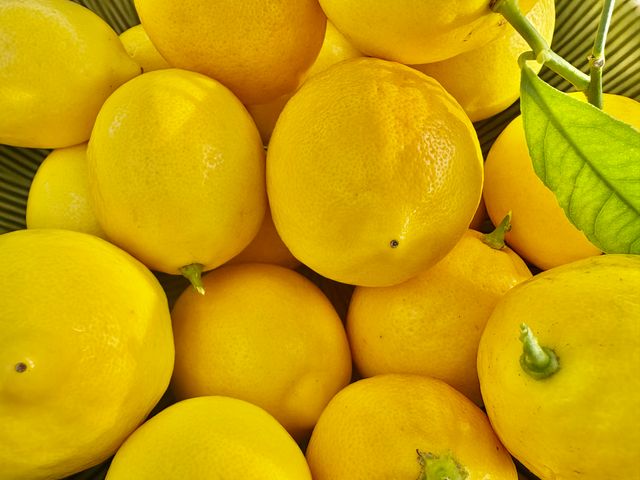
Why are lemons sour when other fruits are sweet? Lemons are sour because they contain a lot of citric acid. We also need to remember that there are a huge variety of lemons, some very sour and some not so much. We need to break this question down into a few parts. Why does citric acid taste sour? How do lemons cope with so much citric acid? Why did they evolve to have citric acid? And how and why did we breed them to be so sour?
Let’s look at why citric acid tastes sour first of all. Most acids taste sour, although some taste more sour than others. And some acids, such as hydrochloric acid, is not something you should ever try to taste. They taste sour because acids release hydrogen ions, which interact with the taste cells on our tongues. We have type III taste receptor cells inside the taste buds on our tongues, and they detect acidity using a protein called OTOP1. This protein lets hydrogen ions pass through a cell membrane, where they form an electrical signal that travels to the brain. The amount of hydrogen ions changes the level of sourness. On the low end, sparkling water is carbonated, which means it contains carbonic acid, and that has a very slight sour taste. And on the top end, we have citric acid and acetic acid (vinegar), which are extremely sour.
So, how can lemons cope with so much citric acid? All acids are corrosive. You can tell how corrosive citric acid is because if you drink a lot of lemon juice, it can damage your teeth, and they might feel slightly painful. The acid strips away calcium and phosphate minerals in tooth enamel, making it temporarily porous and exposing the nerves. Your saliva can replace some of those minerals, but if you constantly drink lemon juice, it can cause irreversible damage. So, if citric acid is so corrosive, how do lemons survive? They can survive because they store most of the acid inside special compartments called vacuoles. These have membranes that separate the acid from the rest of the cell. The vacuoles can have a pH as low as 2, but the surrounding cell stays close to a neutral 7. Lemons use something called a proton pump to accomplish this. The proton pump uses energy to push hydrogen atoms from the cytoplasm into the vacuole, making it more acidic. The vacuole has a special membrane which keeps the acidic contents away from the rest of the cell.
Why have lemons evolved citric acid? Well, lemons are not the only fruit that have evolved citric acid. Some fruits that are sweet also contain it. Oranges, pineapple, strawberries, cherries, mangos, and apples all contain citric acid. They also contain a lot more sugar than lemons do, which is why they taste sweet to us and not sour. But we all know that fruit like pineapple is sweet, but they have a certain tartness. That comes from the citric acid. All of these plants have evolved to develop citric acid because it can protect the fruit against microbes. High acidity creates a very harsh environment for bacteria and fungi. Citric acid can also deter many pests, birds, and herbivores. A lot of fruits are sour until they are ripe. This deters animals from eating them until their seeds are ready to be dispersed.
So, why have lemons become as sour as they have? The very sour lemons that we have have become that sour through selective breeding, just like the sweet fruits we have have become much sweeter. Modern lemons are a hybrid of citron and sour orange fruits, both of which can be very acidic. The citron has a very thick rind and is used for its scent more than as a food. Some other citrus varieties developed mutations that reduced their acidity, making their natural sugars more noticeable. Humans then selected the type of citrus fruit they wanted and cultivated them accordingly. Sweet oranges were useful for eating, and people wanted sweeter ones. Sour lemons were useful for flavoring food and making drinks. There are far more cultivated varieties of citrus fruit around today than there used to be. We took the quality of a fruit we liked and “improved” on it. You can even get lemons that don’t have much citric acid. They can be eaten like oranges and are very popular in drinks in India, Pakistan, and the Middle East. And this is what I learned today.
Sources
https://cen.acs.org/biological-chemistry/biochemistry/Lemons-sour-s/97/web/2019/03
https://www.aip.org/inside-science/the-genetic-reasons-why-citrus-fruits-taste-so-sour
Photo by L. Lum: https://www.pexels.com/photo/fresh-lemons-with-vibrant-green-leaf-35926707/